Scale insects

Pest description:

Avocado scale – Fiorinia fioriniae (Targioni-Tozzetti)

  • Found on many different host plants in the world
  • Feeding damage occurs on the fruit and leaves, and is caused by the immature stages that are light brown in colour
  • Female avocado scales have a transparent exoskeleton, are orange-brown in colour and 1.0 – 1.3 mm in length
  • Immature males have a white exoskeleton and are elongate-oval in shape
  • Very little research has been done to date on the biology and control of avocado scale in South Africa
  • In other parts of the world, 3 – 4 generations have been monitored per year in avocado orchards

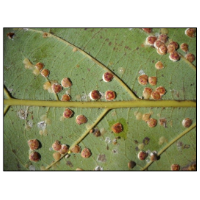
Heart-shaped scale – Protopulvinaria pyriformis (Cockerell)

  • One of the most damaging scales on avocado leaves
  • No damage is not done to the fruit
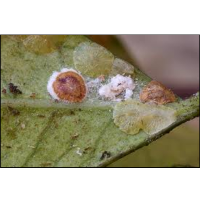
  • The protective layer (± 3 mm wide) of the female heart-shaped scale is hard, brown and heart-shaped with dark radial stripes
  • A waxy egg-sack is often visible under the female scales with 200 – 300 eggs per sack
  • The male form of the scale has not been seen in South Africa
  • Two generations of heart-shaped scale can be monitored throughout the avocado season in the Nelspruit area.
  • Nymphs or crawlers are light green
  • They emerge from eggs during November and March
  • It takes roughly 5 – 7 months from egg to adult stage, depending on temperature

Honeydew

  • Plant sap that scale insects feed on is full of plant sugars
  • Sap is excreted by scale insects in the form of honeydew
  • Ants feed on, and spread, the honeydew and protect scale insects on the trees against predators in a mutualistic relationship
  • The sweet honeydew excretion acts a food source for ants
  • Sooty mould is observed when Ascomycete fungi (mainly Cladosporium and Alternaria) grow on the honeydew
  • Fungal growth limits the effective area of photosynthesis on the leaves and can lead to tree decline or defoliation in all cultivars

Heart-Shaped Scale

Heart-Shaped Scale
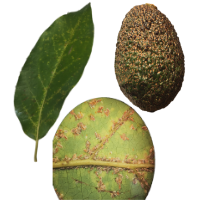
Avocado Scale

  • Suggested scout methods:

    • Scout the underside of leaves and especialy rough-skinned cultivar fruit for scale insects

    Control options:

    • The waxy covering of scale insects protects them against contact insecticides
    • Contact insecticides must be sprayed on the immature stages (crawlers)
    • Scales are controlled by oils, systemic pesticides or biological control agents such as parasitoid wasps and Coccinellid beetles
    • Registered product labels

Heart-shaped Scale:

Soft-brown Scale:

  • Potential biological control agents:

home-sketch