

Pest description:
- False codling moth (FCM), Thaumatotibia (=Cryptophlebia) leucotreta.
- An Important pest of citrus throughout southern Africa and a phytosanitary pest of avocados.
- Also infests guava, macadamia, pecan, avocado, litchi, vines and many other cultivated and wild fruits.
- Eggs small, flattened, and normally laid singly on or near fruit.
- Larvae creamy white at first, with a brownish black head.
- The fully grown larva has a dark brown head and pinkish red body, with less intense colour on the underside.
- Larvae grow to a length of 15-20 mm.
- There are 5 larval instars.
- Larvae pupate near the soil surface or beneath leaf litter.
- The adult moth is relatively small, about 10 mm long when at rest, inconspicuously mottled brownish grey in colour, and nocturnal.
Suggested scout methods:
- Scout for pest damage and with pheromone traps.
- ‘Hass’, ‘Pinkerton’, and ‘Edranol’ are more susceptible to FCM than other cultivars and should be scouted more intensely
- FCM typically flies in the top third of the tree so hang traps there but inside the canopy where they are shaded from direct sunlight so that the pheromone does not degrade prematurely
- Larval damage is characterized by white, powdery sap surrounding a small hole. As larvae develop, larvae excrete granular frass (excrement) that is pushed out the hole.
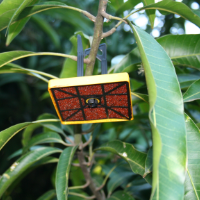
- Traps for FCM include: 1) Chempac Yellow Delta Traps and Chempac False Codling Moth Lure, or 2) Insect Science Yellow Delta Traps and FCM PheroLure®.
- Traps should be placed at a frequency of 1 trap per 4 hectares at a height of approximately 2 m above ground in the shaded area of a tree.
- The maximum trap attraction radius is approximately 15m
- Begin trapping in October and continue until harvest is completed.
- If 10 or more moths are recorded in a trap in a week then control measures should be initiated or intensified.
- Replace the sticky card when it is no longer sticky.
Control options:
- MRL’s
- In situations of high pressure there is no single control measure that will control FCM to a desirable degree, so it is critical to understand that FCM control is dependent on a multidisciplinary approach to be effective and least disruptive to natural enemies.
- Monitor for FCM in your orchards.
- When necessary, use registered chemicals to control population levels at the correct time (critical).
- Do orchard sanitation. Larvae can complete their life-cycle in soft, rotting fallen fruit so remove and destroy these. If the infested fruit is placed in a pile or dump, ensure it is covered or buried. If destroying it using a hammermill, use a high-intensity grinding hammermill as this will reduce the chances of survival.
- Keep accurate records of monitoring, sanitation and chemical treatments.
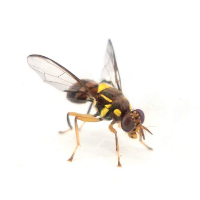
Pest description:
- Four indigenous fruit fly species of the genus Ceratitis (C. capitata, C. cosyra, C. rosa, C. quilicii) are of economic importance for the production of fruit crops in South Africa.
- The invasive fruit fly, Bactrocera dorsalis (previously Bactrocera invadens) or Oriental fruit fly, is very important for phytosanitary reasons.
Damage:
- Avocado is generally a poor host for fruit flies.
- ‘Hass’ is a conditional non-host for C. capitata and a poor potential host for C. cosyra and C. rosa.
- Mature, undamaged ‘Hass’, ‘Fuerte’ and ‘Pinkerton’ fruit have very low susceptibility to Oriental fruit fly.
- Successful development can occur in damaged or compromised fruit.
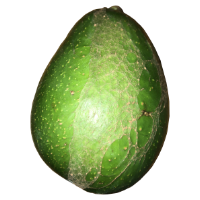
- Damage on the fruit is similar to FCM: a tiny hole surrounded by white, sugary exudate. However, as the fruit sizes, this lesion dries, cracks, and transforms into a highly distinct star-shaped crack on the fruit skin surface.
Control options:
- Do not only rely on trap catches – scouts must still check fruit for damage.
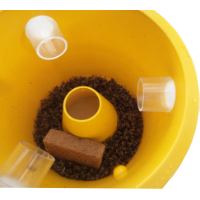
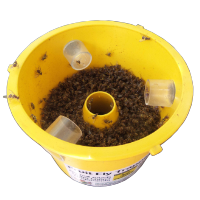
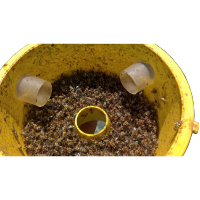
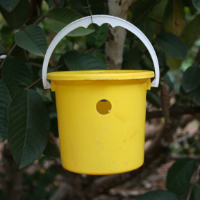
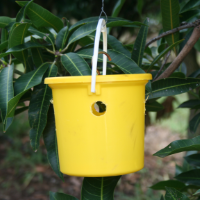
- There are two types of traps registered for monitoring Bd, with the main difference being the frequency with which they are placed. The two types are Chempac Bucket Traps with Chempac ME Lure and a Vapona (dichlorvos) strip, and Lynfield Traps with Invader-LureTM and a Vapona (dichlorvos) strip.
- For both types, hang traps at 1.5 m above ground in the canopy of the tree on the shady, south-eastern side.
- Trapping should continue throughout the year.
- If 1 or more Oriental fruit flies are recorded in a trap in a week then control measures should be initiated or intensified.
- Several areas are considered pest free areas for Bd. In areas considered free from this pest, Chempac Bucket Traps with Chempac ME Lure and a Vapona (dichlorvos) strip each should be placed at a frequency of 1 trap per 100 hectares, with at least 1 trap per PUC. Lynfield Traps with Invader-LureTM and a Vapona (dichlorvos) strip each should be placed at a frequency of 1 trap per 10 000 hectares, also with at least 1 trap per PUC. Traps should be placed in areas where infestation is likely to occur e.g. dumps where fruit waste is discarded or human dwelling places. If a tree is not available for a trap to be hung in, a pole can be set up instead.
- Detection of Bd in a pest free area has regulatory implications. Contact your region’s SAAGA horticulturist so that the issue can be escalated.
- In areas not free from Bd, Chempac Bucket Traps with Chempac ME Lure and a Vapona (dichlorvos) strip each should be placed at a frequency of 1 trap per 5 hectares. Lynfield Traps with Invader-LureTM and a Vapona (dichlorvos) strip each should be placed at a frequency of 1 trap per 25 hectares.
- In areas where Bd is present, baiting should be done using GF-120 or M3 bait stations. Baiting should be done in combination with the placing of MAT (Male Annihilation Technique) blocks.
- Traps for other fruit fly species (Ceratitis spp.) include McPhail Type Traps with Chempac BioLure® Fruit Fly. Traps should be placed at a frequency of 1 trap per 2 hectares. Trapping should begin after flowering and continue until harvest. If 7 or more fruit flies are recorded in a trap in a week then control measures should be initiated or intensified.
- If trapping in the same block for both Bd and Ceratitis spp., ensure that traps are at last 3 trees apart.
- In orchards where trapping for Bd, remove the following plant species that produce eugenol or methyl eugenol and thereby decrease the efficacy of Bd traps: Melaleuca bracteata (Johannesburg Gold / Black Tea Tree), Ocimum gratissimum (African Basil / Clove Basil), Eucalyptus species (Gum trees), Ocimum basilicum & Ocimum tenuiflorum (Sweet Basil / Holy Basil), and Syzygium aromaticum (Clove tree). Also remove Psidium guajava (wild guava) as it is a strong host for Bd.
- MRLs
Suggested program:
- Remove mature, fallen fruit from the orchard floor to break the breeding cycle. If the infested fruit is placed in a pile or dump, ensure it is covered or buried. If destroying it using a hammermill, use a high-intensity grinding hammermill as this will reduce the chances of survival.
- Larvae spend about 10-25 days feeding inside fruit before boring their way out, and then pupate in the top 2-5 cm of soil. If dropped fruit contains empty, smooth exit holes, larvae have likely entered the soil. An entomopathogenic product containing Metarhizium could be applied to help kill larvae.
- Use attract and kill methods to control fruit flies (baiting)
- Use combinations when applying control measures e.g., Last Call + GF120 / Last Call + attractant
Bactrocera dorsalis Status in Production Areas:
| Province | District Municipality | Status |
|---|---|---|
| Limpopo | Vhembe | Present, subject to official control |
| Limpopo | Mopani | Present, subject to official control |
| Limpopo | Capricorn | Present in some areas, subject to official control |
| Limpopo | Sekhukhune | Present in some areas, subject to official control |
| Limpopo | Waterberg | Present in some areas, subject to official control |
| Mpumalanga | Ehlanzeni | Present, subject to official control |
| Mpumalanga | Nkangala | Present, subject to official control |
| KwaZulu-Natal | uMgungundlovu | Present in some areas, subject to official control (N.B. Recent change) |
| KwaZulu-Natal | Harry Gwala | Present in some areas, subject to official control |
| KwaZulu-Natal | uMzinyathi | Absent |
| KwaZulu-Natal | King Cetshwayo | Present, subject to official control |
| KwaZulu-Natal | Ugu | Present, subject to official control |
| Eastern Cape | All districts | Absent |
| Western Cape | All districts | Absent |
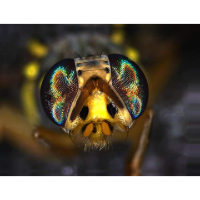
Fruit Fly & Damage on Fruit
Supporting documents:
- Bd: procedure to apply for new or expired Bd Removal Permit (2026 – for removal of fruit from areas infested by Bd to non-infested areas), application form (2026), application to open account (2025)
- Government Regulations: Amendment of Control Measures – November 2017
- Monitoring form (xlsx)
Pest description:
Pseudotheraptus wayi
- Size: ±15 mm in length and ±4 mm in width.
- Reddish-brown, ventral side of an adult is creamy whitish-brown without stippling.
- Long slender antennae.
- No spiny protuberances on thorax.
- Female lays an average of 80 eggs in total during her life cycle and the cycle from egg to adult lasts 31-48 days.
- Five nymphal stages.
- Eggs laid singly on fruit, twigs, and flower stems.
- The adult life-span ranges from 73-84 days.
- Damage on fruit usually seen towards the end of the season. Both larvae and adults feed on fruit.
- Damage is limited to a single tree or a few trees in close proximity of each other.
- Highly mobile, polyphagous.
Damage:
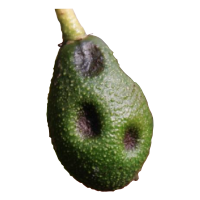
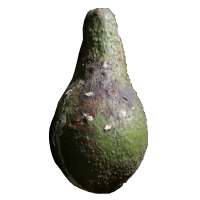
- Feeding sites appear water-soaked or darker than the surrounding peel. Lesions become brown then black, necrotic, sunken or crater-like, and can develop cracks or raised wart-like tissue. Young fruit can become malformed or abort.
- Fruit remain susceptible beyond early fruit set. Damage can occur during mid- and late-season fruit development.
Suggested scout methods:
- Scout weekly from fruit set through fruit development and record both whether coconut bugs are present and any coconut bug damage observed. ‘Pinkerton’ and ‘Fuerte’ are preferred cultivars.
- Coconut bugs are more likely to be concentrated in low-lying riverine areas, valley floors, and blocks adjacent to natural bush or macadamia orchards. Scouting routes must prioritize these specific border trees rather than the centre of the block.
- To catch live specimens for confirmation, scouts should conduct “shake monitoring” in the early morning only: when temperatures are low, the bugs are sluggish and will drop directly onto ground sheets instead of flying away.
- Scout ± 10 trees/ha and multiple fruit at each tree where possible. Coconut bugs occur in localised hot spots but are highly mobile.
- Note that adults are strong fliers, blend into the upper canopy, and disperse instantly when approached.
- Check fruit in the upper canopy especially in large, dense trees.
- Coconut bugs have long mouthparts like other plant-feeding sucking bugs.
- Fruit can have horizontal cuts.
- Damage is only visible long after coconut bug feeding, but this may indicate hot-spots in the orchard for future pest monitoring.
- Slice open the skin of aborted green fruit. If internal water-soaked lesions, necrotic depressions, or hard lumps in the flesh are present, coconut bug is active even if no live insects are spotted.
Management:
- Prune to maintain an open, manageable canopy and tree height. This makes scouting easier and maximizes efficacy of pesticide applications.
- Attract and conserve predators, parasitoids, and other natural enemies.
- Control doing spot sprays where pest damage on fruit are evident and coconut bugs are observed.
Fruit Damage caused by Coconut Bug:
Coconut Bug Images:
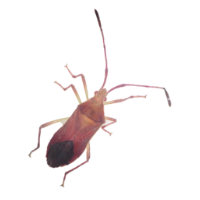
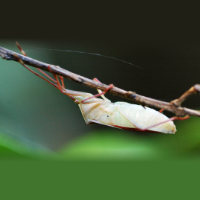
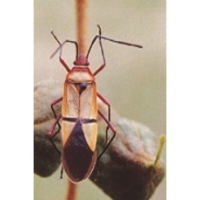
Pest description:
- Small to medium bugs, green or brown in colour.
- These include small mirid bugs such as avocado bug (Taylorilygus spp.) and citrus leafhopper (Penthimiola bella), and larger bugs such as Anolcus campestris and Coenomorpha nervosa.
- The avocado bug (Tayloryligus sp., Family Miridae) is the dominant sucking bug, brown to black in colour, and is very small – up to 3 mm long.
- Adults and nymphs occur mainly during flowering and early fruit development.
- Feeding on young fruit causes internal lesions and characteristic raised bumps (“vosknoppe”) which may only become visible several weeks after feeding.
- Larger bugs: feeding causes internal brown lesions, depressions on the fruit surface, bumps, cracking, fruit malformation, and occasionally premature fruit drop.
- Avocado fruits <30 mm in diameter are most susceptible to damage
- Sucking bugs are predominantly nectar feeders
- Sucking bug mouthparts are both sucking and piercing which enables the bugs to not only penetrate plant tissues, but also feed (suck) on the nectar of the flowers
Suggested scout methods:
- Scout for insects or damage symptoms in a M or W route through an orchard block
- Sucking bugs are often unevenly distributed so scout throughout the block and pay particular attention to known historical hot spots and areas adjoining alternative host plants.
- Scout 10 trees per block, 10 panicles per tree
- Include the upper canopy and internal parts of large trees when practical.
- During flowering and early fruit set, inspect flower panicles/inflorescences and young fruit for avocado bugs and other small sucking insects.
- Continue scouting fruitlets and developing fruit throughout the season for larger sucking bugs. Be sure to also check for feeding damage.
- Fruit are most susceptible when fruit diameter is smaller than 30 mm. Fruit maturity also plays a role in rendering fruit susceptible: Schalk Schoeman found that in Pinkerton this threshold was when fruit reaches a dry matter content of 13%/moisture content of 87%.
- Record insects and fruit damage separately. When unusual bugs are encountered, retain specimens or photographs for identification.
- Plant-feeding sucking bugs have long mouthparts that extend to their second set of legs or even their whole body
- Thresholds-
- On year: > 13 avocado bugs / block
- Off year: > 7 avocado bugs / block
Control options:
Other possible control mechanisms:
- Use canopy management and pruning to increase light penetration, which will also allow for better spray penetration.
- Consider removing any plants of Ricinus communis (Castor oil bush) as it acts as an overwintering host for sucking bugs.
- Leguminous cover crops can act as possible alternate hosts. Avoid planting legume vegetables such as soya beans, or other vegetables such as potatoes or tomatoes adjacent to an orchard as this will allow for seasonal migrations into orchards.
- Consider planting covers such as marigolds, onions/garlic that might repel bugs. See this article and table for lists.
- A biological control agent – Green Shield (the parasitic wasp Trissolcus basalis) – is available from Koppert.
- Compatibility with other control agents has been determined independently; wait 4 weeks or longer after applying Acephate, Bifenthrin, and/or Beta-cyfluthrin to introduce the wasp.
- The wasp is compatible with Pymetrozine and Spirotetramat.
- For compatibility with other control agents, please contact Koppert or your regional horticulturist.
- Note that Trissolcus basalis is not registered on South African avocados.
Other ongoing actions:
- Registration of products with actives Neem oil, Potassium silicate, and Lambda cyhalothrin. Several dossiers are on the desk of the Registrar of Act 36 of 1947.
- Kairomones: Work is underway by Schalk Schoeman to trap sucking bugs
- Biocontrols: egg wasp parasitoids Anastatus sp. and Trissolcus sp.
- Sucking bugs continue to be raised as an issue at the Subtrop Plant Protection Products Forum.
Supportive Documents:
What to look out for:

Avocado bug (Tayloryligus sp.)
(up to 3 mm long)
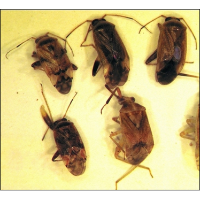
Avocado bug (Tayloryligus sp.)
(up to 3 mm long)
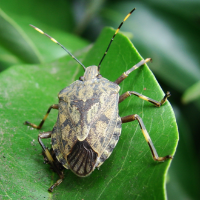
Brown stinkbug (Coenomorpha nervosa)
(up to 14 mm long)
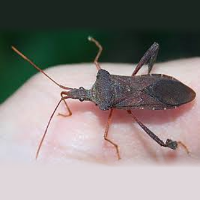
Tip Wilter (Anoplocnemis curvipes)
(up to 25 mm long)
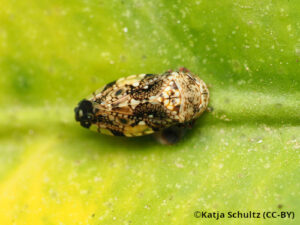
Citrus leafhopper (Penthimiola bella)
(up to 4 mm long)
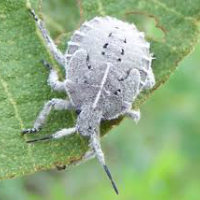
Powdery/woolly stinkbug (Atelocera raptoria)
(up to 17 mm long)

Green vegetable bug (Nezara viridula)
(up to 13 mm long)
Pest description:
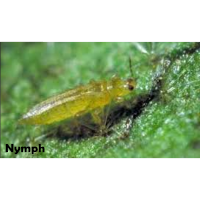
- Minute insects about 1 mm in length with four narrow fringed wings.
- Immature stages and adults hide under the fruit calyx.
- Feed by rasping the plant surface causing small silver blotches.
- The main pest species is the South African citrus thrips (Scirtothrips aurantii).
- Other thrips species known to infest avocados – greenhouse/black tea thrips (Heliothrips haemorrhoidalis) and red-banded thrips (Selenothrips rubrocinctus) – are likely sporadic.
Damage:
- Thrips feed on young avocado fruit and flush.
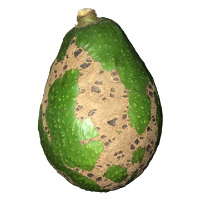
- Feeding on fruit results in brown, corky, or russet-like scarring which reduces fruit marketability and packouts.
- Damage frequently starts around the calyx and can enlarge as the fruit grows.
- Scarring on fruit does not necessarily confirm thrips infestation, as damage due to wind can also produce similar superficial corky lesions. Therefore confirm the presence of thrips, especially larvae, before deciding on control.
Suggested scout methods:
- ‘Pinkerton’ and ‘Carmen Hass’ are particularly attacked by thrips. Also scout ‘Fuerte’ fruit.
- Begin weekly monitoring for thrips during flowering and continue through fruit set and early fruit development. Do not wait for visible fruit scarring to appear – this is too late.
- Scout 10 trees per block on all 4 sides. Also scout the edges especially if there is a macadamia block adjacent or in close proximity.
- Scout on the fruit, especially at the northern side and under the calyx – use a paperclip to lift the calyx. Try to scout at least 100 fruit/fruitlets.
- To count thrips present, take an inflorescence and strike or beat it 5 times against clear white paper to dislodge thrips present then count the yellow tiny thrips (not flowers) present
- Scouts should report on yellow thrips observed, not black thrips
- Suggested threshold: 4 thrips / fruit
- Although yellow sticky traps can be used for monitoring, it is advised against as identification of individuals will be difficult.
Control options:
- Before deciding on what to use, first check what your losses are due to thrips damage. Watch Dr. Elsje Joubert’s presentation on this as a guide.
- Consider planting Casuarina spp. or Corymbia (= Eucalyptus) torelliana trees as windbreaks, establishing an interrow cover crop and minimizing mowing thereof. These practices have helped citrus growers control thrips.
- Cover crops that can be planted and will reduce thrips incidence and damage include Medicago sativa (lucerne), Lotus corniculatus (Bird’s-foot trefoil), Trifolium pratense (Red clover), Melilotus alba (White sweetclover), and Phacelia tanacetifolia (Lacy phacelia) (see Nengovhela’s thesis – 2020). These attract generalist predators/beneficials into orchards. See also this article and table for a list of cover crops.
- Consider removing the following plant species from orchards as these are known hosts of South African citrus thrips: Grevillea robusta (silky oak), Vachellia and Senegalia species (formerly Acacia, particularly the Sweet Thorn (Vachellia karroo), Combretum species (Bushwillows), Dichrostachys cinerea (Sicklebush), Bauhinia galpinii (Pride of De Kaap), Kalanchoe delagoensis (Mother of Millions / Chandelier Plant), Ricinus communis (castor oil plant), Gloriosa superba (Flame Lily), Asparagus species,
Musa x paradisiaca (Banana) - Known repellents of thrips are Neem oil / Azadirachtin and garlic extracts.
- Consider making and deploying straw sleeves to house predatory mites that will attack and feed on thrips.
- MRLs
Other ongoing actions:
- Since thrips migrate, do area-wide control
- Although degree day models have been investigated, thrips often have multiple overlapping lifecycles within a season meaning that a degree day model to predict when control agents (chemical and/or biocontrols) can be implemented, will not have value.
- Other control options including attract-and-kill products and entomopathogenic nematodes (including Heterorhabditis bacteriophora and Steinernema spp.) will be raised with chemical and biological control companies.
What to look out for:

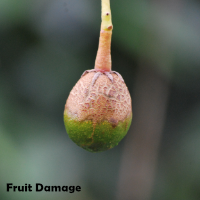
Pest description:
- Sap-feeding insects found on avocado leaves, fruit, twigs, and branches.
- Most infestations are naturally suppressed by parasitoids and predators – outbreaks can occur when natural enemies are disrupted by broad-spectrum insecticides, dust, or unfavourable orchard conditions.
- Both scales are found on the underside of leaves
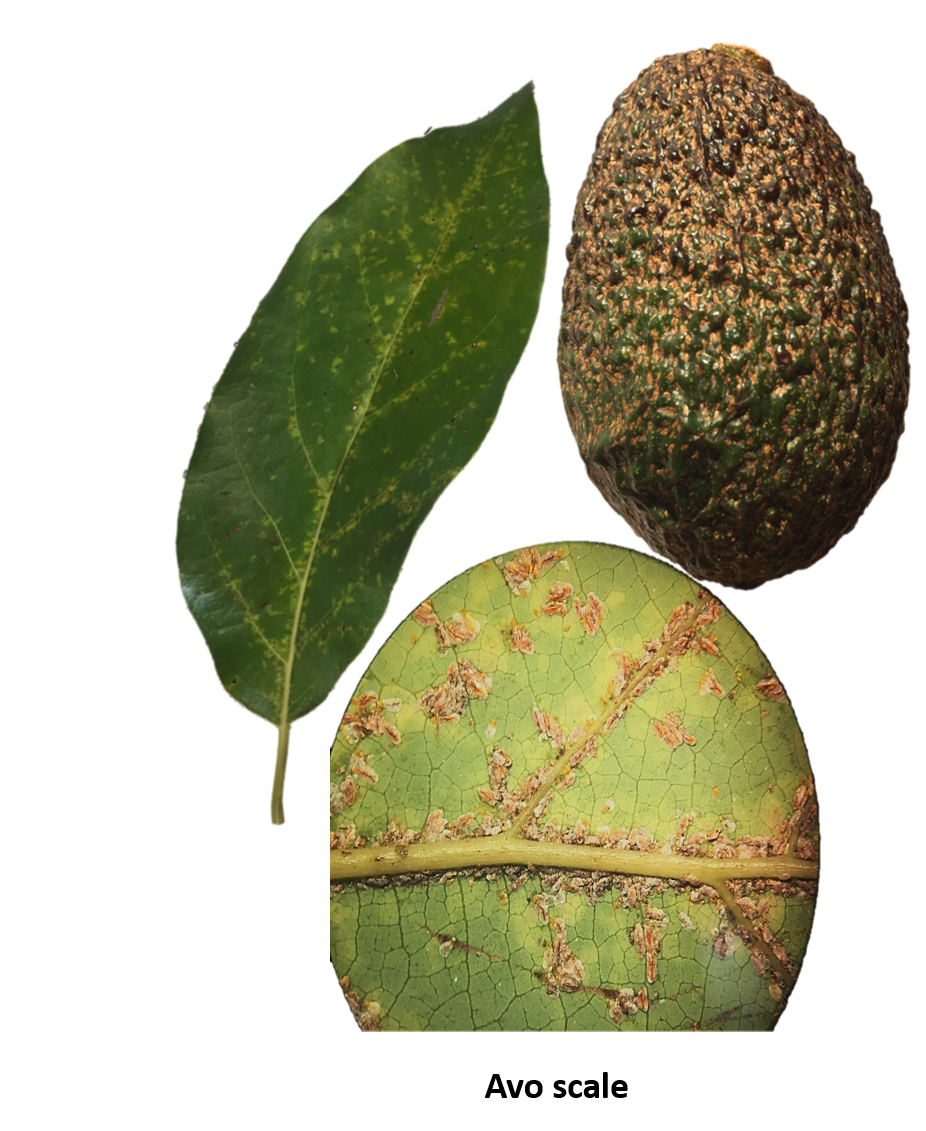
Avocado scale – Fiorinia fioriniae
- Armoured scale (Diaspididae) that does not produce honeydew.
- It occurs mainly on the underside of leaves, particularly along the veins, but can also infest fruit.
- Feeding by immature scales causes small brown spots and chlorosis of leaf tissue and can affect fruit marketability.
- Adult female scales are ± 1-1.3 mm long, thin, and translucent brownish-yellow to orange-brown. Immature males have a white, elongate-oval covering.
- Crawlers are the principal dispersal stage and move to new feeding sites or may be dispersed by wind.
- Avocado scale is generally regarded as a minor pest in South Africa, although occasional severe outbreaks occur.
- In other parts of the world, 3-4 generations have been recorded per year in avocado orchards
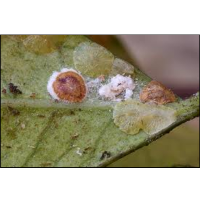 Heart-shaped scale – Protopulvinaria pyriformis
- Soft scale (Coccidae) on the underside of leaves. The reddish-brown adult female is ± 3 mm long and produces a white woolly egg sac ± 200-300 eggs.
- The egg-sack should be distinguished from Long-tailed mealybug – a different pest
- Two generations have been reported in the Nelspruit/Mbombela area with crawlers emerging around November and March.
- Crawlers are light green and are the most susceptible stage for control.
- It takes roughly 5 – 7 months from egg to adult stage, depending on temperature
- Heart-shaped scale produces large quantities of honeydew. Sooty mould growing on the honeydew blackens leaves and fruit, reduces photosynthesis and, under heavy infestation, may contribute to leaf drop and reduced production. Fruit are normally not directly attacked.
- They are dispersed by wind.
Honeydew
- Plant sap that scale insects feed on is full of plant sugars
- Sap is excreted by scale insects in the form of honeydew
- Ants feed on, and spread, the honeydew and protect scale insects on the trees against predators in a mutualistic relationship
- The sweet honeydew excretion acts a food source for ants
- Sooty mould is observed when Ascomycete fungi (mainly Cladosporium and Alternaria) grow on the honeydew
- Fungal growth limits the effective area of photosynthesis on the leaves and can lead to tree decline or defoliation in all cultivars
- If you see sooty mould, look at the underside of leaves above to find scales
Other scales
- Other armoured scales include the latania/palm scale (Hemiberlesia lataniae), Spanish red scale (Chrysomphalus dictyospermi), and mango scale (Aulacaspis tubercularis).
Suggested scout methods:
- Scout the underside of leaves, especially along the main veins, as well as fruit (especially rough-skinned cultivars), twigs, and branches.
- Scales are likely to be present in older, dense, or overgrown orchards, and trees alongside dusty roads.
- Record whether scales are alive, dead, or parasitised rather than just recording presence alone.
- Look for honeydew, sooty mould, and ant activity. If sooty mould is present, inspect the leaves and branches directly above it for soft scales or mealybugs.
- Monitor crawler activity because young stages are generally the most susceptible stage for intervention.
- When scouting the trunk, check if there is an ant trail – a heavy ant presence is an indicator of scales or mealybugs
Control options:
- Scale insects are normally naturally controlled by biologicals such as parasitoid wasps and Coccinellid beetles. Before applying an insecticide, check whether ants, dust, dense canopy growth, or previous pesticide applications have disrupted natural enemies. Note that there are residual effects of pesticides on predators because of their smaller size.
- Attract biologicals by planting cover crops – check the section under Thrips for potential cover crops.
- Control excessive dust along orchard roads where possible and practical.
- Prune to improve air flow, thereby helping scouting and spray penetration, and prevent branches from reaching or touching the soil or adjacent trees where practical.
- Manage ants where they are protecting honeydew-producing scales from predators and parasitoids.
- The waxy covering of scale insects protects them against contact insecticides. Contact insecticides can be sprayed on the immature stages (crawlers)
- Buprofezin and Spirotetramat are growth regulators
- MRLs
Supportive Documents:

Pest description:
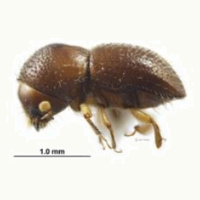
- Euwallacea fornicatus, also known as the polyphagous shot hole borer (PSHB), is a very small invasive ambrosia beetle associated with the pathogenic fungus Fusarium euwallaceae.
- Adult female beetles bore into trunks and branches and introduce the fungus into galleries in the wood. The fungus grows within the galleries as a food source for the beetles and larvae, but can also invade avocado vascular tissue, causing Fusarium dieback.
- Avocado is a reproductive host of PSHB in South Africa, meaning the beetle can establish breeding galleries and reproduce in avocado trees.
- Female beetles are black and ± 1.8-2.5 mm long. Males are smaller, brown, and ± 1.5 mm long. Entry and exit holes are very small – ± 0.85 mm in diameter. Beetles are therefore very difficult to detect during routine scouting.
Symptoms:
- Typical symptoms on avocado include:
- Very small round entry or exit holes on trunks and branches.
- White sugary exudate surrounding the beetle hole.
- Fine frass associated with the entry hole.
- Wet or dark discoloration around the hole.
- Brown, necrotic discoloration beneath the bark and within the wood.
- Branch wilting and dieback and, in severe cases, decline or death of the tree.
- The presence of exudate alone does not confirm PSHB. Check for the small entry hole and gallery. Suspicious samples can be submitted for identification and confirmation – details are below.
- Check trunks and main branches regularly for small entry holes, white sugary exudate, frass, wet staining, or localised bark discoloration.
- Pay particular attention to trees showing sudden branch wilt, branch dieback, or unexplained decline.
- Where a suspicious entry hole is found, carefully remove a small section of bark around the hole.
- Brown necrotic tissue beneath the bark and a gallery entering the wood could signal PSHB, although the beetle itself may not always be present in the gallery.
- Check the entry hole to expose the underlying canker and follow the gallery when investigating a suspected infestation.
- Suspect infestations should be confirmed by a lab as PSHB is extremely small and other ambrosia beetles also occur in South African avocado orchards.
- There is an ongoing trapping project where traps have been placed at selected farms in every production region. Contact your region’s SAAGA horticulturist if you also want to participate in the trapping project.
Control options:
- Early detection and sanitation are the most important intervention measures.
- Cut the tree if the pest is noticed and burn infected wood. Be advised that individuals of the pest are small enough to survive if the wood is chipped.
- Avoid moving infested material between orchards and sterilize tools with household bleach before using on other trees.
- Monitor neighbouring avocado trees and alternative hosts to confirm infestation.
- While there are no chemicals registered on avocados specifically against PSHB; Abamectin (thrips), Acephate (fruit sucking bug complex), Chlorantraniliprole (false codling moth), and Beta-cyfluthrin (fruit sucking bug complex) are known to control the pest in other parts of the world.
- Remove any Ricinus communis (castor bean) plants as these are highly highly preferred reproductive hosts for PSHB.
- Contact your region’s SAAGA horticulturist to inform him/her of the beetle’s presence.
More information:
Sample submission
Send samples to the following address:
Attention: Dr. Lieschen De Vos
FABI Diagnostic Clinic
FABI
University of Pretoria
Lunnon Road
Hillcrest
Pretoria, 0083
Tel: 012 420 3938, 012 420 5826
Email: diagnostic.clinic@fabi.up.ac.za
There is a dedicated page on PSHB at the FABI website, along with FAQs on the pest. Please visit https://fabinet.up.ac.za/research-groups/pshb-research-network.
Please contact the Diagnostic Clinic before posting, sending or couriering any living beetles. These insects can eat through paper and plastic!
Please follow the sample instructions
Please download, fill in and include relevant details in the sample submission form
Pest description:
- Two leafrollers have been recorded: apple/Cape leafroller (Lozotaenia capensana, previously Tortrix capensana), and citrus leafroller (Choristoneura occidentalis, formerly Archips/Cacoecia occidentalis).
- Larvae yellow-green reaching ± 20-25 mm in length.
- Larvae protect themselves by using silk to roll or web leaves together – attaching leaves to fruit or webbing adjacent fruit together.
- When disturbed, larvae characteristically wriggle rapidly backwards.
- Larvae feed on leaves and on the fruit surface within their protected webbed shelter. Fruit feeding causes superficial lesions and scarring that reduces export packouts.
- Eggs are laid in flattened yellow-orange masses containing ± 8-300 overlapping eggs, resembling fish scales.
- Citrus leafroller pupation occurs within rolled or webbed leaves.
Suggested scout methods:
- Scout young flush, fruitlets, and developing fruit for rolled leaves, silk webbing, and leaves attached to fruit.
- Scout especially contact points between leaf and fruit, fruit and fruit, and beneath/around the calyx of young fruit.
- Carefully open webbed leaves and inspect for larvae, pupae, and parasitoid activity.
- Disturb suspected larvae gently; leafroller larvae typically wriggle rapidly backwards.
- Inspect fresh fruit-feeding lesions for nearby webbing before attributing damage to looper, thrips, or other surface-feeding insects.
- Record the presence of larvae and the amount of fruit damage observed rather than justifying control based on webbing alone.
Control options:
Suggested program:
- Generally sporadic pests.
- Numerous parasitoid wasps attack egg, larval, and pupal stages providing effective natural biological control.
- Avoid unnecessary broad-spectrum insecticide applications.
- Attract predators and parasitoids into orchards by planting cover crops – check under Thrips for several possible options.
- Where populations and fresh fruit damage justify intervention, target young larvae before extensive webbing has developed.
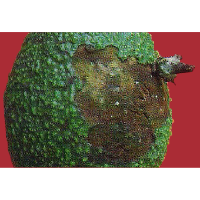
“Leaf roller worms and Amorbia moth affect avocados” (Source: Sanidad Vegetal de Salvador Escalante Michoacán, México)
Pest description:
- Caterpillars of citrus looper, Ascotis reciprocaria (Lepidoptera: Geometridae)
- Five larval stages occur: younger larvae are a few mm long, mature larvae reach approximately 50 mm resembling grey brown twigs.
- Young larvae feed mainly on tender flush while older larvae feed on fruit.
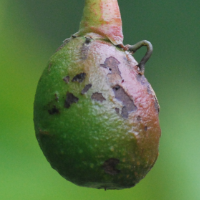
- Young larvae can graze the fruit skin while feeding by older larvae results in sunken lesions that extend into the flesh.
- Damage can easily be confused with wind damage. Unlike leaf rollers, loopers do not spin webs to keep leaves or fruit together.
- Adults are nocturnal grey white moths with brown markings and a wingspan of 45–48 mm.
- Eggs are laid in concealed places – beneath loose bark or in cracks in dead twigs.
- Larvae pupate amongst leaf litter.
- Severe leaf damage can lead to defoliation
Suggested scout methods:
- Do not scout for adult moths as they are nocturnal. Also, moths camouflage themselves and are not easily spotted
- Caterpillars exhibit a typical looping action when moving but can remain motionless for long periods, mimicking a twig
- Young larvae are more likely to be associated with damaged flush while older larvae contribute to fruit injury.
- Scout for leaf and fruit damage (feeding marks by caterpillars) – larvae create deep, continuous “potholes” that carve directly into the fruit flesh
- Distinguish from leaf roller (leaf webbing) and weevil feeding
Control options:
- No registered products
- One of the natural enemies which help to control this insect is a wasp parasitoid
Disease description:
- Phytophthora root rot (PRR) is caused by the soilborne oomycete Phytophthora cinnamomi.
- PRR is one of the major problems in avocado production in many regions of the world, including South Africa.
- Disease development is favoured by waterlogging and poor drainage.
- The pathogen produces motile spores that move in free water through the soil and infect susceptible feeder roots.
- In South Africa, high summer rainfalls and warm temperatures contribute to the incidence of PRR.
- Symptoms observed include:
- Small fruit – as a heavy crop – despite wet soil.
- Dark necrotic lesions on young feeder roots. As PRR progresses, fine roots become black, brittle and die-back. This reduces the tree’s root system impacting on its ability to take up water and nutrients.
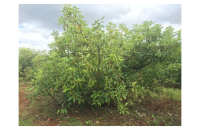
- Defoliation and/or small pale-green or yellow leaves. This can result in sunburn of branches as the canopy density declines.
- Die-back of branches, weak shoot growth, wilting, and brown leaf tips.
- Occasional death of the trees.
- Yield of marketable fruit is severely affected.
- Several diseases are more likely to be more prominent on fruit from infected trees, including:
- Sunburn on fruit and trees
- Pepper spot
- Seed coat death
- Small fruit
- Ring neck
- Vascular browning
- Control measures include maintaining soil health and phosphonate fungicides which release phosphorous acid that controls the disease.
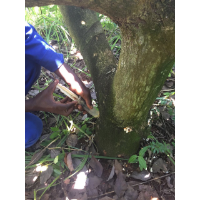
Control options & the Pegg Wheel:
- MRLs
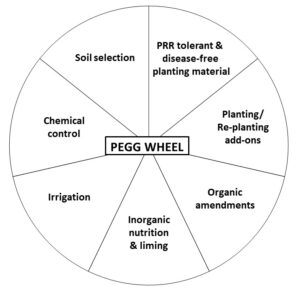
The Pegg Wheel uses an integrated pest management approach towards the control of Phytophthora root and stem rot (PRR). The main aims are to reduce tree stress and improve root (and soil) health. Components of the Pegg Wheel include (Wolstenholme & Sheard 2010):
Soil selection
- Map soils and know soil types and characteristics present.
- Plan orchard considering drainage and erosion during wet weather events.
- Planting along contours is the latest trend, instead of strictly north-south orientation.
- Plant on well drained soils.
- For poorly draining clay soils, plant cover crops and improve drainage by adding organic matter such as compost.
- Ridge to remove excess water and increase soil health.
- Mulch ridges to prevent dessication.
PRR tolerant & disease-free planting material
- PRR tolerant rootstocks include Duke 7, Dusa®, Bounty, Leola, and Zerala.
- Buy trees from nurseries accredited by the Avocado Nurserymen’s Association (ANA).
- Ensure trees do not come into contact with the ground between purchase and planting.
Planting/Re-planting add-ons
- Apply a pre-planting fungicide/sterilant to eliminate PRR propagules present, or at least reduce populations.
- Alternatively, 6 months before planting add fresh cattle or poultry manure to the planting hole, mix with the soil, and cover with straw to introduce NH4+ ions that are toxic to PRR. Note that NH3 is toxic to avocado feeder roots.
- Ca2+ ions are a mild fungicide. Apply gypsum after new plantings. Microgypsum can be applied by fertigation. An annual application of gypsum at 0.5 t/ha improves soil structure and aeration and reduces growth of PRR.
Organic amendments
- Apply mulch to trees to reduce root stress and introduce antagonists to PRR.
- Suitable mulches are woody and have a C:N ratio of 25:1 to 100:1. These include pruned avocado branches that have been chipped, old or composted wood material including pine bark, and straw from grass. Sawdust is not suitable as it is too compact and low in N. Mulches can include fallen leaves, but integrating wood into mulches is better.
- Ensure that the application of mulch or compost does not reduce N by leaf analyses.
- Mulches are best applied in autumn to ensure high microbial activity in spring prior to heavy rains in summer.
Inorganic nutrition and liming
- Use soil and leaf analyses to inform fertilizer applications.
- Add lime to leached, acidic soils to reduce or eliminate Al toxicity and mitigate Mn toxicity.
Irrigation
- Use tensiometers or electronic soil moisture probes to determine when and how much to irrigate.
- Infected trees with rotted roots will require less water, so reduce the number and/or output of drippers or microsprinklers.
Chemical control
- Fungicides providing the best control over PRR include metalaxyl and the phosphonates (phosphorous acid – H3PO3).
- Phosphonates activate tree defences at low concentrations, and directly inhibit PRR at high concentrations.
- Phosphonates are applied by trunk injections. Other application methods include foliar sprays and stem paints.
Suggested program:
- Do not plant in pathogen-infected soils
- Use Trichoderma to protect and stimulate the roots
- Apply potassium silicate to reduce plant stress and help with disease management
- Apply a deep mulch
- Treat severely infected trees with phosphorous acid according to the management guidelines here
More reading:
- The use of phosphonates – industry communication
- Phosphonic acid Q&A
- Distinguishing between root rots – July 2022

Disease description:
- Avocado sunblotch disease is caused by Avocado sunblotch viroid (ASBVd), a very small circular infectious RNA molecule.
- The disease has been present in South African avocado production since at least the 1950s.
- ASBVd reduces fruit quality and can substantially reduce yields, including in infected trees that show no visible symptoms.
- ASBVd is transmitted through seed, grafting, pollen transfer, and via infected tools.
- Symptoms can be present on fruit, leaves, and branches. Bear in mind that trees can be symptomless carriers.
- Fruit develop sunken yellow, white, or reddish streaks or patches on the skin, generally extending from the stem end. Severe lesions may become necrotic.
- Fruit may be small and distorted.
- Infected trees set fruit later than uninfected trees.
- Infected trees suffer from canopy loss and flower excessively.
- Fruit from infected trees ripens faster, colours quicker, is more susceptible to vascular browning and rot, and softens quicker than fruit from uninfected trees.
- Leaves show distinctive white, pink or yellow streaks or mottles or yellow or white bleaching along the midrib or veins, and can be distorted. Leaf symptoms are inconsistent i.e. they can be absent or erratic.
- Branches show yellow, orange, white, or colourless sunken longitudinal streaking and spotting of the bark.
- Older branches and trunks can develop rough rectangular cracking or an “alligator-bark” appearance.
- Medium- and highly infected trees can have dramatically lower yields – as much as 83-96% lower yields, than healthy trees.
Control options:
- There is no chemical treatment for affected trees.
- To minimize spread, use household bleach to sterilize tools (both pruning and harvesting and any others) between trees.
- Index trees, rootstocks, and scions to ensure all are uninfected.
- If there are symptoms but the indexing result is negative, either remove and destroy the tree or wait 6-12 months and then index it again. Do not use such a tree as a seed or budwood source.
- There is uneven distribution of ASBVd within plant material, so different leaves sampled from the same infected tree might not all test positive – some will test negative. Similarly, leaves from the same infected tree tested at different physiological stages might give different results.
- If you notice infected fruit on a tree, it does not necessarily mean the tree is infected. The source of infection could be from an asymptomatic pollen donor.
- The best time of the season to test is around flowering. For budwood orchards where there is no flowering but annual pruning, test when there is active growth and flush. Ensure that budwood orchards do not have flowers as these provide a route for infection.
- Trees that are indexed as positive or weakly positive must be destroyed to prevent disease spread.
- It has been suggested that besides removing the infected tree, all neighbouring trees within 15 m diameter should also be removed.
- Where trees have been removed, ensure that as much root material as possible has been removed, and solarize the ground for 3-6 months after removal before replanting.
More guidelines around indexing material to test for ASBVd:
- Use household bleach to sterilize equipment. Wear gloves so that you can sterilize these between samples. Consider having a colleague hold the plastic bag so that there is no cross-contamination of samples. Wipe off the bleach with paper and discard the paper.
- Sample from a mix of young and old leaves from trees
- Destroy trees showing symptoms without hesitation. If unsure, please contact either the ARC-TSC or QMS (see below for contact details)
- The sampling protocol varies depending on how many trees are sampled:
- Sample 5 leaves from 4 trees and combine as single sample consisting of 20 leaves
- Sample 8 leaves from 3 trees to make up 24 leaves as a sample
- If testing individual trees, sample 20-24 leaves from the main branches
- Sample leaves from different growth stages of a plant
- Send the leaf samples with a reliable, fast courier service. Do not send samples over weekends, as parcels could be exposed to extreme temperatures in storehouses
- If it is necessary to store the budwood, keep it at 4 -10°C – DO NOT FREEZE
- Detection in symptomatic trees may be difficult as ASBVd has an unequal distribution throughout such trees. In such trees, do not sample for indexing during fruit set, fruit development, and while fruit are still on the tree as you may get false negative results i.e. ASBVd is present but at such a low concentration that it is not detected.
More reading:
- Send samples to either of the following addresses:
Attention: Dr Elize Jooste
Agricultural Research Council Tropical and Subtropical Crops Institute (ARC-TSC)
Disease Management Unit
3 River Road
Nelspruit, 1200
South Africa
Tel: +27(0)13 753 7009
Email: JoosteE@arc.agric.za
Attention: Dr Ilse-Marie Bezuidenhout
QMS Food Tech
15 Annecke Street
QMS Building
Letsitele, 0885
South Africa
Tel: +27(0)76 312 5450
Email: restech6@qmslab.com

Disease description:
- Dematophora necatrix (previously Rosellinia necatrix) is a soil-borne saprophyte and grows at temperatures between 5-30°C and a soil pH between 6-8.
- The pathogen is present in all major provinces with avocado production – Limpopo, Mpumalanga, KwaZulu-Natal, and the Western Cape.
- Causal agent of white root rot disease on a wide range of plant species.
- This pathogen produces toxins that are involved in the death of the tree. The fungus can survive in the soil by producing thick-walled spores (chlamydospores).
- Symptoms resemble Phytophthora root rot:
- Primary symptoms include rapid decline of vigour, sparse foliage, and leaf wilting.
- Secondary symptoms occur quickly (2 weeks) and include chlorosis, leaf drop, and death of the entire tree, often with leaves and/or fruit still attached.
- Dark brown lesions are present at the base of the trunk with white mycelial gowth on the bark and mycelial strands occasionally extending under the bark.
- Infected roots become necrotic and covered with a fine layer of mycelia.
- Note that trees can be infected but still appear asymptomatic.
- The pathogen survives saprophytically in infected roots, woody material, and organic matter in soil. Sanitation and chipping of wood (to enable faster decomposition) are therefore recommended.
- It can spread locally between neighbouring root systems, resulting in expanding patches of declining trees.
- Longer-distance spread may occur through movement of infected plants, roots and contaminated soil.
- Movement of soil and contaminated equipment from affected orchard areas should therefore be minimised.
- Clean machinery and footwear before moving from infected to clean blocks.
Control options:
- For rough detection use the twig baiting method:
- For every tree you want to index, cut 4 avocado twigs to 15cm long
- Sharpen one end and place the twigs 10-15cm from the trunk in 4 different directions (these can be the 4 cardinal direction points)
- After 3 months, remove the twigs and store them in a dark container for 7 days
- If you are using the method on multiple trees, make sure the twigs are labelled – perhaps with masking tape
- The resulting white mycelium indicates the tree is probably infected
- For confirmation, twigs can be sent to the FABI Diagnostic Clinic (details below)
- This method was developed by Eguchi et al. (2009) and modified for avocado trees by van den Berg et al. (2025).
- An integrated approach of biocontrol, solarization and good orchard sanitation has shown promising results in other countries.
- Orchard sanitation should focus on immediately removing infected material and restricting vehicle movement in the orchard until the disease has been identified.
- Solarization and good soil preparation prior to planting is critical.
- Magagula et al. (2021) have made the following recommendations:
- Pre-planting fumigation with Chloropicrin (trade name: Pic Plus)
- During planting: applications of B-Rus and Trichoderma harzianum T22 (trade name: Trianum-P – available from Koppert). Replenish when necessary.
- For an established orchard, apply Fluazinam in combination with B-Rus and Trichoderma harzianum T22.
- Note that Fluazinam is not registered on South African avocados, but Subtrop is engaging with the chemical company to get registration finalized.
- Two studies (Martínez-Ferri et al. 2019 and Moreno-Pérez et al. 2024) suggest subjecting trees to controlled, moderate water deficit (~50% field capacity). This triggers an abiotic stress response that helps these trees withstand infection by WRR and exhibit higher survival rates than well watered trees. Use this method in infected zones.
- Commercially available rootstocks, such as Dusa® and Bounty, are susceptible to WRR.
- SAAGA is investigating importing BG83, a rootstock tolerant to WRR, from Spain, to test its tolerance to PRR. In addition, SAAGA has asked various companies with products containing Trichoderma, Bacillus, or Pseudomonas to consider registration of these against WRR on avocados.
What to look for:
- Check the root collar for white mycelium
- Mark infected trees with tape

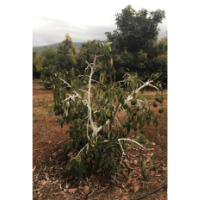


Photos provided by: Noëlani van den Berg, Avocado Research Programme (FABI), University of Pretoria
More information:
Sample submission
Send samples to the following address:
Attention: Dr. Lieschen De Vos
FABI Diagnostic Clinic
FABI
University of Pretoria
Lunnon Road
Hillcrest
Pretoria, 0083
Tel: 012 420 3938, 012 420 5826
Email: diagnostic.clinic@fabi.up.ac.za
Please download, fill in and include relevant details in the sample submission form
Supporting documents:
Disease Description
- Caused by Colletotrichum gloeosporioides and other Colletotrichum spp.
- A reason for major fruit quality problems on the market.
- Spores are splash-dispersed by rainfall or overhead irrigation.
Symptoms
- Large round brown secondary infection spots that develop around lenticels, wounds, insect damage or other injured tissue on fruit or smaller tear-drop shape spots on fruit skin.
- Postharvest lesions begin as small brown to black spots which enlarge and become increasingly sunken as the fruit ripens.
- Lesions may crack and, under humid conditions, develop pink to salmon-coloured spore masses.
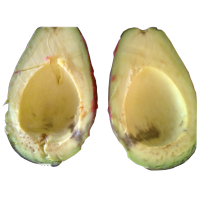
- Rot progresses into the flesh beneath the lesion forming a roughly hemispherical area of postharvest fruit decay.
- Early lesions may be difficult to detect on ripe ‘Hass’ because its dark, rough rind can mask external symptoms.
Origin and Dispersal
- Spores are produced on infected and dead plant material and dispersed mainly by rainsplash.
- Fruit can be infected from fruit set through to harvest – especially during warm, wet periods when fruit can remain wet for extended periods.
- After infection, the fungus may remain dormant/latent for weeks or months. Natural antifungal defences in immature fruit suppress fungal growth, but these defences decrease during ripening, allowing the pathogen to grow and cause visible decay.
- Dead twigs, branches, trapped dead leaves, and old fruit in the canopy are important sources of inoculum.
Control Options
- MRL’s
- Spores can remain latent on young green avocados hence a recommendation to apply sprays at pigeon-egg stage and thereafter as fruit are young and expanding.
Prevention
- The Velvick rootstock shows increased resistance to anthracnose on fruit
- Prune out dead wood before flowering to reduce wind damage and remove spores from the tree, preferably before flowering.
- Pruning increases ventilation/aeration which reduces dampness and humidity in the tree that would promote fungal growth.
- Skirt low branches where necessary and use windbreaks where wind damage could cause fruit scarring.
- Spores require a period of high relative humidity (90% or more or free standing water on the fruit skin) to successfully germinate to infect. Using an automated weather station, one can monitor “Leaf Wetness Duration” (LWD). If rainfall keeps the inner canopy wet for 15 hours or more, apply an Azoxystrobin spray once the sun emerges.
- Control pests that damage fruit
- Keep calcium and nitrogen in balance as this improves fruit resistance to anthracnose. The N:Ca ratio should be below 2 and fruit Ca content should be above 0.08%.
- Do not harvest in wet conditions as this makes fruit sensitive to mechanical abrasion which will predispose fruit to infection
- Treat fruit within 24 hours of harvesting with a registered postharvest fungicide.
Disease description:
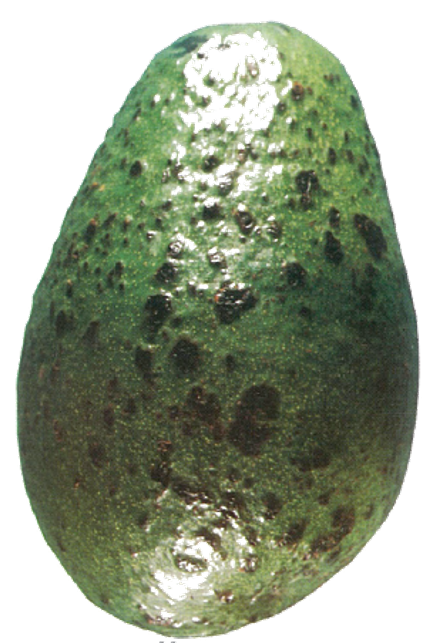
- Fungal spot on avocado fruit, leaves and stems caused by the plant pathogen Pseudocercospora purpurea (Cercospora)
- On fruit, darkening of the peel/skin is the first sign of infection. Later the underlying tissue swells and raises up forming a small ‘black’ spot. Spots vary in size with irregular shapes and defined margins. As cells dry out, the spot becomes sunken and cracks. Mature lesions are generally ± 3-6 mm in diameter.
- Cercospora spores are produced and released between midnight and 03:00 am when climatic conditions are optimal (warm, wet, rainy weather)
- Spores are trapped in dew on fruit and leaves, and germinate and penetrate the fruit skin
- This process continues until no more free water (required) is available, usually when the sun dries the fruit and leaves i.e. problem orchards = dense foliage or late morning sun
- After the spore has penetrated the fruit skin, infection develops for 2-3 months before symptoms become visible.
- Cercospora susceptibility: Fuerte > Ryan > Edranol > Pinkerton > Hass
Stumbling blocks:
- Encroached orchards – microclimate is conducive to disease development, and make it difficult to spray effectively. Ensure that trees are thoroughly pruned, especially if row orientation blocks late morning sunlight (which allows trees to remain wet for longer thereby extending the spore penetration window).
- Poor spraying technique resulting in insufficient cover
- Date of first spray – too late (usually) or too early
- Incorrect or no use of buffers, wetters and stickers
- Timing of spray applications is not accurate
- Cycle time is not sufficient to spray all orchards (not enough spray carts)
- Failure to adjust the spray program in accordance with seasonal conditions
Which spray is the most important?
- In a season of normal rainfall, the first spray is the most important spray
- The correct timing and application of the first spray probably determines your success or failure of disease control
- Climate change and shifting spring rain patterns mean growers must rely more heavily on in-orchard electronic data loggers (tracking leaf wetness and microclimate humidity) rather than just looking at a calendar
3 factors determines the date of first spray:
- Daily maximum and minimum temperatures
- Daily rainfall/onset of first spring rains
- Fruit size
- Spray fruit before they reach 4 cm diameter – 2.5 cm or more (pigeon egg stage) and as the Z-factor approaches 15. Adjust timing according to your production area, rainfall, and local environmental conditions.
- Avocado growth rate = ~ 1 cm / 2 weeks. Follow the labels of chemicals being applied to ensure that there is ample coverage during the early fruit-set phase to protect newly expanded, unprotected skin.
- Can be sprayed for Cercospora when ≥ 2 cm
- Willis and Mavuso (2007) found that effective control is also achieved by alternating copper oxychloride with Azoxystrobin: two applications of Azoxystrobin (in October and
November) followed by two applications of Copper oxychloride (December and January). This can result in 50% less copper being applied than if all 4 applications are copper oxychloride. Note that application times vary per area. N.B. Azoxystrobin is at high risk of inducing resistance. Never apply Azoxystrobin consecutively more than twice in a season, and always follow with a multi-site fungicide such as copper.
Control Options:
- Prune to maintain an open, well-aerated canopy to allow fruit and leaves to dry quickly after rainfall or dew.
- Monitor fruit size, rainfall, temperature, and Cercospora risk early after fruit set and during fruit development.
- MRL’s
Supportive Documents:
- Factsheet – 2022
- Control of Cercospora, pepper spot, tar spot, anthracnose, stem end rot – 2009
- Presentation – English, Afrikaans – October 2017
- Z formula programme for predicting spore release (2017-2018) (xls)
Disease description:
- Very small, superficial tiny black specks, similar to ground black pepper particles or tar spots (irregular, larger, superficial spots) with entirely smooth margins. Spots can vary
between 1-5 mm diameter. Caused by species of Colletotrichum. - The specks often start on the fruit pedicel or shoulder of the fruit and then localize to the upper third of the fruit. Pepper spot has been associated with fruit surfaces exposed to the sun or prone to sunburn.
- Tear staining commonly occurs where spores are carried downwards on fruit by water.
- Tar spots are randomly distributed over the fruit.
- Both are commonly associated with peaks on the fruit skin, rather than valleys/crevasses.
- Temperatures above 18 °C and rainfall (20 mm +) for a 10-14 day period can result in severe disease pressure. Recording daily maximum/minimum temperatures and rainfall can allow prediction of high disease pressure.
- Pepper spot susceptibility: Hass & Pinkerton
Control Options:
- Prune and thin to maintain an open canopy. This will improve air circulation allowing fruit to dry out quicker, and improve spray penetration.
- Monitor orchards with a previous history of pepper spot especially during warm, wet periods.
- MRL’s
Supportive Documents:
Branch Cankers (Botryosphaeriaceae)
- Avocado Branch Canker Factsheet – January 2023
- These pathogens gain entry via natural openings or wounds therefore:
- Disinfect pruning equipment between each tree. This will also help minimize spread of ASBVd.
- Do not prune during the rainy season. Try to prune during the dry season to give pruning wounds adequate time to heal.
- Chip and mulch pruned material as this will help with composting.
Phytopythium Root Rot
- Phytopythium root rot of avocado – February 2023
- Phytopythium (Pp.) vexans can actively co-infect orchards alongside Phytophthora cinnamomi so that both operate as a root rot complex. This is complicated by both producing the same disease symptoms.
- One distinction: Pp. vexans causes the root cortex to slough/fall off entirely, leaving the inner section/stele behind.
Black Root Rot (Nectriaceae)
- Black root rot of avocado – January 2023
Disease description:
- Also known as ‘red rust disease’.
- Caused by parasitic green alga, Cephaleuros virescens.
- A minor disease of avocado but may become severe on stressed or poorly growing trees and under prolonged warm, humid conditions.
- There is a direct relationship between disease development and high humidity, frequent rainfall, prolonged leaf wetness, and shaded foliage.
- Direct relationship between reduced tree vigour and damage caused by the alga.
- The alga usually infects leaves on low-hanging or shaded branches, and rarely infects leaves in the upper, sunny canopy.
- Initial small areas of yellow-green to grey growth on the upper surface of leaves.
- Later a ‘velvety’ texture due to the formation of sterile hairs (setae) and sporangiophores which contain the pigment haematochrome that give the colony a rusty-red colour.
- Scraping away the red coating exposes a gray to dark necrotic crust.
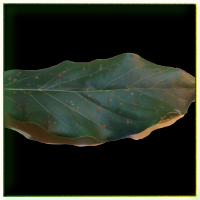
- Algal spots on Fuerte avocado leaves are the typical rusty-red colour.
- If algal growth is extensive it can reduce the photosynthetic potential of the leaf resulting in leaf drop. It can also cause shoot dieback.