
left-arrow-sketch

Plant Nutrition

Feeder roots take up the majority of nutrients from the soil. Since most of the feeder roots are within the top 15 cm of the soil, small doses of fertiliser will work well. In addition, maintenance of a healthy root system by controlling or suppressing root diseases (Phytophthora root rot, white root rot (Rosellinia necatrix)) will help with nutrient uptake, plant health and yields (Newett et al. 2018).

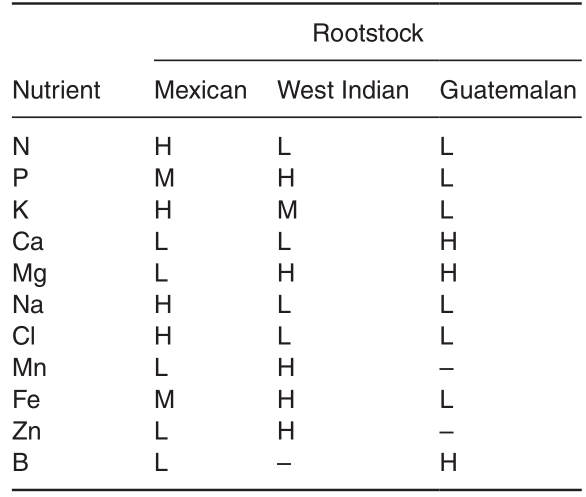
The parentage of the choice of rootstock affects the nutrient concentration in the scion (as determined from leaf sampling). This was reviewed by Lahav et al. (2013) who also summarized these effects in a table (Table 11.5; reproduced with permission of CABI through PLSClear):

Based on studies by: Bard (1997), Ben Ya’acov et al. (1992), Embleton et al. (1962), Haas (1950a,b), Lahav et al. (1993), Oppenheimer et al. (1961), Whiley et al. (1996), and Zilberstaine et al. (1992).

Known parentages of rootstocks used in the industry are:
Mexican: Zutano, Duke 7, Leola (Merensky 6)
West Indian: Velvick
Mexican × Guatemalan: Dusa, Bounty, Zerala (Merensky 5)

Young avocado trees (up to 18 months old) can be fertilised with 20 g SAAGA mix per tree per month. The application can be doubled with each flush up to a maximum of 100 g SAAGA mix per tree per month. The SAAGA mix is a dry mix of: 3 parts limestone ammonium nitrate (LAN), 2 parts monoammonium phosphate (MAP) and 1 part potassium nitrate (KNO3).

  • Generally foliar nutrient applications are not recommended as mature avocado avocado leaves have a thick waxy cuticle. Thus only small amounts of a nutrient would be absorbed (Newett et al. 2018). Additionally, studies involving foliar sprays have been inconsistent.
  • However, there are cases where foliar nutrient application should be considered: cold wet soils in spring restrict nutrient uptake needed for spring growth, in saline soils,
    and where soil pH unsuitable and soil chemistry (e.g. nutrient tie-ups) restrict sufficient root absorption (Lovatt 2013).
  • A nutrient applied via a foliar spray should be phloem-mobile to be transported to where it is needed. Phloem-mobile nutrients include Nitrogen, Phosphorus, Potassium, Chlorine, and Sulphur. Partially phloem-mobile nutrients include Zinc, Iron, Manganese, Molybdenum, and Boron. Calcium is not phloem mobile. Note that nutrients can
    have very different rates of absorption through leaves (Newett et al. 2018).
  • Apply foliar sprays to developing leaves – ½ or ⅓ expanded or to plant organs other than leaves (e.g. flowers), and use wetting agents or soluble fertiliser formulations (Newett et al. 2018).
Function:
  • High exchangeable Al content in the soil correlates with a low soil pH, leaching of essential plant nutrients such as Ca, Mg, K and low yield
Norm:
  • Topsoil exchangeable Al content < 20 mg/kg
  • Soil norm < 30 ppm
Nutrient application example(s):
  • Pre-plant or regular maintenance
  • Timely lime applications according to pre-plant soil analysis

Table of Contents:

Deficiency Symptoms | Function | Norms | Nutrient Application | Phenology | Causes of Deficiency | Interaction with other Nutrients

Deficiency Symptoms
      • Fruit small and misshapen, bumpy and sickle-shaped, overcoming B deficiency in ‘Hass’ shown to increase fruit size by 13-18% but no effect on number of fruit or total yield per tree (Smith 2004).
      • Fruit to stem joint is skew and twisted
      • Abortion of fruit
      • Chlorosis of leaf tips and margins in young leaves, leaves distorted and crinkled
      • Death of young buds and new growing shoots (apical and axillary growing points)
      • Shoot tip death result in knob on shoot
      • Typical shot-hole symptoms on spring flush leaves, and yellowing of young leaf edges.
      • Swelling of twigs, node swelling, corky lesions, trunk canker, limb dieback
      • Loss of apical dominance resulting in horizontal rather than vertical growth
      • High B concentrations in ‘Hass’ fruit flesh correlated with lower incidence and severity of diffuse flesh discolouration and vascular browning, and lower severity of body rots (Marques et al. 2003)

Back to Table of Contents

Function:
      • Important for good flower formation and fruit set
      • Essential for Ca transport and normal development of plant tissues at growing tips of shoots, branching, flowers, fruit and roots (apical meristems)
      • Important for metabolism of carbohydrates (incl sugars and their derivatives and polysaccharides such as starch & cellulose)
      • Synthesis of nucleic acids
      • Especially important during pollination, pollen tube growth and early fruit set
      • Reduce the incidence of disorders at growing points in synergism with Ca
      • Cross-links pectic substances in the cell wall thereby strengthening cells (Ryden et al. 2003) and bridges the cell wall and membrane (Voxeur & Fry 2014).

Back to Table of Contents

Norms:
      • Leaf B = 40 – 50 ppm
      • Optimal B : Ca ratio is 1 : 3 at 3 – 4 true leaf stage
      • Soil B = 12 ppm (clay soil), 0.25 ppm (sandy soil)
      • Concentrations in ‘Hass’ fruit peel correlate well with leaf concentrations (Smith 2004) – to be expected for a phloem-mobile nutrient

Back to Table of Contents

Nutrient application example(s):
      • Apply 2-3 foliar sprays of 100 g/100L (3 – 4 g/m2) Solubor (± 21 % B) or 3 – 5 L/ha (Jaganath and Lovatt (1998) and Lovatt (1999) found that foliar sprays of Solubor® (at 6 g B/tree) targeting cauliflower stage of flowering (not the leaf) significantly increased cumulative yield (12 and 11 t/ha) over a 3-year period, a foliar spray (2 kg B/ha) applied at early fruit set improved fruit size, in another treatment a spray at fruit set (1 kg B/ha) followed by a second spray a month later increased both yield and fruit size (Cossio-Vergas et al. 2009)).
      • Ammonium Borate (10 – 15 % B, 41 – 63 % N) as a medium cover spray (> 1000 L water/ha) during the main foliar flushes
      • Apply 10 g/m2 Boronat (10 % B) spread evenly under tree canopy
      • Lower rates of B should be applied in sandy soil and for Pinkerton
      • Do not apply more B if levels are sufficient or apply with multiple sprays – foliar B sprays at flowering only induce a response if leaf B level deficient (Smith et al. 1997) and multiple B sprays are not required for good fruit set and do not overcome alternate bearing (Dixon 2006).

Back to Table of Contents

Phenology & properties:
      • B uptake is limited if application does not correspond with foliar flushes during which time soil applications of B are strongly advised
      • Foliar application during spring on actively growing leaves or during the main root flush on the soil
      • Mobility is relatively low in the plant
      • The sugar borate complex form of B is mobile in xylem
      • Mobility in phloem is limited
      • May be lost through water exudation from plant
      • Translocated from mature leaves to flowers and young leaves (Minchin et al. 2012, Coetzer et al. 1993). B moves through phloem vessels by forming a complex with perseitol, a C7 sugar alcohol found in avocado phloem sap (Minchin et al. 2012). Factors that influence concentration and movement of perseitol in phloem may also impact B concentrations in avocado fruit.

Back to Table of Contents

Cause of deficiency:
      • Light, sandy soil
      • Too much N
      • Too much Ca
      • Cold / wet weather
      • Low soil moisture (drought)

Back to Table of Contents

Interactions with other nutrients (Newett et al. 2018):
      • Do not apply in combination with urea – may cause deformation of the flower carpels (Salazar-Garcia from Lovatt 2013, Jaganath 1993), and may reduce yields significantly

Back to Table of Contents

Table of Contents:

Deficiency Symptoms | Function | Norms | Nutrient Application | Ca Uptake | Phenology | Causes of Deficiency | Interaction with other Nutrients

Deficiency Symptoms
      • Young leaves show leaf tip necrosis (leaf burn)
      • Death of young buds
      • Short storage life of fruit
      • Low Ca levels correlates with high grey pulp incidence in Fuerte and Pinkerton
      • Collapse and disintegration of root systems

Back to Table of Contents

Function:
      • Cell division and cell elongation
      • Normal function of cell membranes; forms cross-linkages with pectin gels in plant cell walls to contribute to mechanical strength of fruit tissues and confer protection against cell-wall degrading enzymes (Hocking et al. 2016, Wehr et al. 2004), also binds with lipids and proteins of plant cell membranes (Jacobson & Papahadjopoulos 1975, Kirkby & Pilbeam 1984, Legge et al. 1982) so as to stabilize them and help maintain subcellular compartmentation (de Freitas et al. 2011, Suzuki et al. 2003).
      • Permeability of cell membranes
      • Building block of cell walls and help reduce internal quality problems
      • Reduce the incidence of disorders at growing points in synergism with B

Back to Table of Contents

Norms:
      • Leaf Ca = 1.2 – 2.0 %
      • Optimal leaf B : Ca ratio is 1 : 0.03 at 3-4 true leaf stage
      • Optimal leaf Mg : Ca ratio is 1 : 4
      • Optimal leaf K : Ca ratio is 1 : 0.75
      • Topsoil leaf Ca : Mg ratio = 2.5 – 5.0 : 1 mg/kg
      • Subsoil Ca = 500 – 2000 ppm
      • Fruit Ca > 0.15 % (Nov) and > 0.05 % (Feb)
      • Fruit Ca:N level > 0.1 (Nov) and ± 0.1 (Feb)
      • Measure fruit N at the same time as fruit Ca – better indicator of fruit robustness than Ca alone. Fruit with N : Ca ratios in the high 30s or above at risk of postharvest quality defects developing. Do not place such fruit into extended storage or subject to long supply chains (Joyce 2021)
      • Fruit demand for Ca greatest within the first 8 weeks after fruit set (Bower et al. 1989, Witney et al. 1990) whereafter fruit stomata become lenticels (Blanke 1995) and waxy cuticle thickens (Coates et al. 1993) limiting fruit transpiration.

Back to Table of Contents

Nutrient application example(s):
      • Apply small amounts via fertigation or simultaneously while irrigating (Lovatt 2013)
      • Apply Ca(NO3)2 at a rate of 100-300 kg/ha split into 2-4 applications over 6-8 weeks (foliar spray)
      • Apply a buffered Ca (170 g / L, 17 % Ca) post fruit set at a rate of 7.5 L/ha every 7 – 14 days until harvest (foliar or through the irrigation system)
      • Apply a buffered Ca at a rate of 3 – 4 L/ha (400 g / L Ca, 40 % Ca, 6.9 % N) at 10-day intervals from fruit set until 1 month prior to harvest with a minimum of 500 L water / ha (foliar or through the irrigation system)
      • Soil application of Gypsum (Ca + S) at a rate of 1-3 tons/ha broadcasted under the whole canopy area if fruit & leaf Ca levels < 0.5 & < 1.5 respectively
      • In sandy soils or areas of high rainfall especially, apply small relatively frequent doses to soil to keep Ca in soil solution and root zone (Joyce 2021)
      • Do not apply with K
      • Increasing rates of soil-applied Ca in various forms typically provide little or no increase in avocado fruit Ca concentrations (du Plessis & Koen, 1987, Hofman, 2006). Microfine gypsum application increased Ca concentrations in the soil solution and xylem sap of ‘Hass’ avocado trees. However, these increases did not carry through to the leaves or fruit (Hofman, 2006). This suggests governing importance of other factors for Ca transport and distribution within the tree. Gypsum does, however, act as a mild fungicide for Phytophthora root rot when applied annually at a low rate (Blakey and Wolstenholme, 2014). As such this may have an indirect effect of increasing Ca uptake through improved root health in orchards where Phytophthora root rot is a problem (note: gypsum also displaces K and Mg in the topsoil and subsoil (Lahav et al. 2013) and should therefore be used for deeper applications – use a dolomitic product for topsoil and subsoil application).
      • Availability of soil-applied Ca linked with soil pH. Most Ca applied as lime or dolomite, except when soil pH is within recommended guidelines or too high, in which case gypsum can be applied (Newett 2018). Some Ca supplied as a component of superphosphate fertiliser and Ca(NO3)2. Soil applications of calcium thiosulphate (Newett 2018) and/or Ca(NO3)2 after fruit set applied to produce better results need to be investigated (Joyce 2021). Application of calcium thiosulphate in high pH soils after fruit set apparently works (Newett et al. 2018).
      • Canopy sprays: Ca(NO3)2 applications 9 months preharvest increased Ca concentrations in Fuerte peel and flesh and reduced chilling injury (Saucedo-Hernández et al. 2003).

Back to Table of Contents

Getting Ca uptake right (Joyce 2021):
      • Soil uptake: driven by root growth (cultivar – Ben-Ya’acov & Michelson 1995, Marques et al. 2003, Whiley 2013, Willingham et al. 2001, 2006) and adequate Ca supply; restrained by low soil pH (< 5), other nutrients (N, Mg, K) (Celis 2016, Hofman et al. 2005), dry or waterlogged soil (soil type – Bonomelli et al. 2019 – supply and availability dependent on and specific to soil type i.e. sand vs. loam vs. clay, particle size distribution, inorganic matrix mineral composition, organic matter (OM) content, cation or anion exchange capacity (CEC, AEC), etc.], aeration and soil moisture content)
      • Root uptake: driven by transpiration (tree health/vigour and water status – Bower et al. 1989, Willingham et al. 2004,  Witney et al. 1990) and root pressure (Hocking et al. 2016, Palzkill & Tibbitts 1977, Saure 2005); restrained by Ca binding to xylem cell walls (Saure 2005). Ca progresses upward lower plant parts saturated. Ca uptake by plant organs driven by their export of an auxin (indole-3-acetic acid; IAA) which is greater during periods of high metabolic activity or vigorous growth (Cutting & Bower 1989).
      • Fruit uptake: driven by fruit transpiration (leaves generally transpire more than fruit – Leonardi 2005), fruit growth, auxin export; restrained by excess vegetative growth (oversupply of N fertilizer, low crop load, fruit thinning, insufficient or poorly-timed pruning) in relation to crop load or factors that limit transpiration (low relative humidity and stomatal closure)

Back to Table of Contents

Phenology & properties:
      • Rectify Ca deficiencies as early as possible in the season
      • Early spring flush, flowering and fruit set (August – September)
      • Ca is translocated in xylem through the transpiration steam
      • Ca is transported in very small amounts in the phloem
      • Ca has a limited downward movement ability
      • Movement to meristematic tissue limited by high humidity
      • High Ca levels will lengthen ripening time
      • Not evenly distributed between leaves and fruit
      • Peak demand for Ca higher during early fruit growth stages

Back to Table of Contents

Cause of deficiency:
      • Light, sandy, acidic soil (low pH)
      • High Na, Mg or Al levels in soil
      • Low soil moisture or drought
      • Uptake affected in decreasing order by the presence of K, ammonium, Mg & Na

Back to Table of Contents

Interactions with other nutrients:
      • Ca and K compete for uptake by plant roots – do not apply at the same time.
      • K antagonistic to other nutrients, particularly Ca, in the fruit (Hofman et al. 2005)
      • The ratio of (Ca+Mg):K has been negatively correlated with body rots (Everett et al. 2007, Hofman et al. 2002, Whiley 2013, Willingham et al. 2006), stem-end rot (Whiley 2013, Willingham et al. 2006), vascular browning and leaching and discrete patches (Whiley 2013).
      • Increase the fruit (Ca+Mg):K ratio to >0.065 to reduce development of postharvest body rots in ‘Hass’ fruit (Everett et al. 2007). The reason for this relationship between cation balance and fruit quality is unclear. One possibility is that K and Mg compete with Ca for binding sites on the plasma membrane, potentially disrupting normal membrane function and causing electrolyte leakage (Schonherr & Bukovac 1973).
      • It is easier to upset the balance between these three cations in sandier soils (Newett et al. 2018).
      • High fruit N and low fruit Ca concentrations have been associated with predisposition to and development of postharvest disorders and diseases (Joyce 2021).

Back to Table of Contents

Function:

Required in small quantities

Norms:

Leaf Na < 80 ppm

Nutrient application example(s):

Not generally applied to alleviate deficiencies

Phenology & properties:
  • Avocado severely susceptible to excess Cl
  • Heavy applications result in leaf burn of the tips and margins, and leaf abscission
  • Toxicity can also result in reduced shelf life (Crowley et al. 2016)
  • Application of nitrates can result in reduced root uptake of Cl, and alleviate toxicity (Bar et al. 1987)
Interactions with other nutrients (Lovatt 2013):
  • Cl, under saline conditions, competes with and reduces uptake of nitrates (Xu et al. 2000). This uptake and toxicity can be offset by increasing nitrate fertilization (Barr et al. 1992, Xu et al. 2000).
Deficiency:
  • Dark green leaves
  • Shortened internodes, dieback of growing terminal shoots
Function:
  • Plant function and enzyme activation

  • Catalyst in photosynthesis and respiration
Norms:
  • Leaf Cu = 5 – 15 ppm
  • Soil Cu = 3 – 10 ppm
Nutrient application example(s):
  • Apply in small quantities as foliar spray
Phenology & properties:
  • Fungicide treatments containing Cu can supply sufficient amounts


Table of Contents:

Deficiency Symptoms | Function | Norms | Nutrient Application | Phenology | Causes of Deficiency

Deficiency Symptoms
      • Chlorosis (yellowing or in worst cases bleached white) of areas between leaf veins while veins and midrib remain green
      • Brown necrotic areas develop on leaf
      • Stunted or thinned extension growth

Back to Table of Contents

Function:
      • Fruit (greenskins) lose colour to become a lighter green
      • Interveinal chlorosis of leaves with narrow dark-green strips along the leaf veins
      • Leaves of summer flush smaller and pale yellow to white
      • Leaves abscise
      • Dessication of shoots
      • Required in small quantities
      • Important for chlorophyll formation and hence the absorption of sunlight energy for photosynthesis
      • Synthesis of proteins

Back to Table of Contents

Norms:
      • Leaf Fe = 75 / 100 – 150 ppm
      • Soil Fe = 4 – 20 ppm
      • Fruit Fe > 40 ppm (Nov) and > 60 ppm (Feb)

Back to Table of Contents

Nutrient application example(s):
      • Iron chelate (9 % Fe) can be supplied through the irrigation in calcareous soils, or as a foliar spray at a rate of 4 – 8 L/ha
      • Liquid Fe with a nitrogen carrier (13 % Fe, 14 % N, 65 % S) can be applied as a foliar spray or through the irrigation at a rate of 05 – 1 L/ha

Back to Table of Contents

Phenology & properties:
      • Apply at any time when needed
      • Make sure your soil is in a good physical condition
      • Mobile in xylem and mostly moves to chloroplasts
      • No translocation from old to young leaves
      • Fe levels are controlled by the reversible binding with ferric phosphoprotein and phytoferritin

Back to Table of Contents

Cause of deficiency & symptoms:
      • Chlorosis (yellowing or in worst cases bleached white) of areas between leaf veins while veins and midrib remain green
      • Brown necrotic areas develop on leaf
      • Stunted or thinned extension growthCauses:
      • Excessive Zn depresses Fe uptake
      • Calcareous or limestone type soils with a high soil pH
      • Applications of calcium carbonate (lime) can cause lime induced chlorosis
      • High levels of B, Cu or Mn
      • High P levels reduce the solubility of Fe
      • N accentuates Fe deficiency due to increased growth of tissue
      • Poor drainage or excessive rain
      • Sandy soils
      • Peat / muck soils where organic matter ties up iron

Back to Table of Content

Table of Contents:

Deficiency Symptoms | Function | Norms | Nutrient Application | Phenology | Causes of Deficiency | Interaction with other Nutrients

Deficiency Symptoms
      • Older leaves develop interveinal chlorosis
      • Yellow colour moves from tip of leaf toward the midrib of leaf, base of leaf remains green
      • Low Mg levels correlate with high grey pulp incidence in Fuerte.

Back to Table of Contents

Function:
      • Mg is important during photosynthesis, forming chlorophyll molecules, cell division and as an energy source in the plant
      • Mg helps with protein synthesis and P and N metabolism

Back to Table of Contents

Norms:
      • Leaf Mg = 0.5 – 0.6 %
      • Leaf Mg : Ca ratio of 1 : 4
      • Leaf Mg : K ratio of 1 : 3
      • Topsoil Ca / Mg ratio = 2.5 – 5.0 mg/kg
      • Subsoil Mg = 200 – 400 ppm

Back to Table of Contents

Nutrient application example(s):
      • Apply chelated Mg (5 % Mg) at a rate of 4 – 8 L/ha as foliar spray
      • A suspension of Mg (30 % Mg) can be applied at a rate of 9 – 12 L/ha on the spring and summer flushes
      • Ca-Mg-NO3 can be applied as foliar spray at 5-10 g/m2 where Mg and Ca deficiencies are observed
      • Soil application: dolomitic lime can be used as a source of Mg in the soil

Back to Table of Contents

Phenology & properties:
      • Early spring flush, flowering and fruit set (August – September)
      • Mg is mobile in phloem
      • Mg can be transported from older leaves to shoot apex
      • Mg moves via mass flow to avocado roots

Back to Table of Contents

Cause of deficiency:
      • Acidic soils (low pH): In acidic soils, Al competes with Mg for root uptake sites
      • Sandy, lightly structured soil: There is high K content in these soil
      • Some cultivars / rootstocks show poor Mg uptake
      • Wet, cool weather
      • Uptake affected in decreasing order by the presence of K, ammonium, Ca & Na

Back to Table of Contents

Interactions with other nutrients (Joyce 2021):
      • High fruit Mg concentrations are associated with a greater severity of discrete patches, but a lower severity of diffuse flesh discolouration and vascular leaching (Hofman et al. 2002, Whiley 2013). Therefore the focus should rather be on the balance between Mg, Ca and K cations in fruit, as this is more strongly linked to fruit quality than Mg alone.
      • The ratio of (Ca+Mg):K has been negatively correlated with body rots (Everett et al. 2007, Hofman et al. 2002, Whiley 2013, Willingham et al. 2006), stem-end rot (Whiley 2013, Willingham et al. 2006), vascular browning and leaching and discrete patches (Whiley 2013).
      • Increase the fruit (Ca+Mg):K ratio to >0.065 to reduce development of postharvest body rots in ‘Hass’ fruit (Everett et al. 2007). The reason for this relationship between cation balance and fruit quality is unclear. One possibility is that K and Mg compete with Ca for binding sites on the plasma membrane, potentially disrupting normal membrane function and causing electrolyte leakage (Schonherr & Bukovac 1973).
      • It is easier to upset the balance between these three cations in sandier soils (Newett et al. 2018).

Back to Table of Contents

Table of Contents:

Deficiency Symptoms | Function | Norms | Nutrient Application | Phenology | Causes of Deficiency | Interaction with other Nutrients

Deficiency Symptoms
      • Young mature leaf develops dull, yellow mottled appearance (interveinal chlorosis), first near midrib and then extended to outer leaf edge
      • Leaf size and shape remain normal

Back to Table of Contents

Function:
      • Required in small quantities
      • Cofactor of enzymes responsible for catalyses of nitrate to nitrite
      • Important for photosynthesis where carbohydrates are formed as a source of energy
      • Synthesis of Proteins
      • Pollen germination and growth of the pollen tube

Back to Table of Contents

Norms:
      • Leaf Mn = 75 – 250 ppm
      • Soil Mn = 6 – 40 ppm

Back to Table of Contents

Nutrient application example(s):
      • Foliar application of 4 – 8 L/ha with 6 % Mn chelated product
      • Foliar application of 2 – 4 L/ha (water: 200 – 400 L /ha) Zn (20 %) and Mn (125 %) suspension during first active growth flush in October, and repeated during summer flush if needed
      • MnO can be applied on the ground when deficiency symptoms occur

Back to Table of Contents

Phenology & properties:
      • Too much Mn is more of a problem than too little
      • Increase the soil pH to decrease Mn uptake
      • Like Ca and Mg, the uptake of this cation is competitive
      • Relatively immobile in plants
      • Translocated via xylem as Mn2+ or weakly combined with organic acids
      • Concentrates in growth points (meristematic tissue)
      • Too much Mn will result in interveinal chlorosis with small reddish-brown spots, small black spots developing next to the leaf midrib and larger veins, and rooting in cuttings may be impaired

Back to Table of Contents

Cause of deficiency:
      • Too much Mn is more of a problem than too little
      • Increase the soil pH to decrease Mn uptake
      • Like Ca and Mg, the uptake of this cation is competitive
      • Relatively immobile in plants
      • Translocated via xylem as Mn2+ or weakly combined with organic acids
      • Concentrates in growth points (meristematic tissue)
      • Too much Mn will result in interveinal chlorosis with small reddish-brown spots, small black spots developing next to the leaf midrib and larger veins, and rooting in cuttings may be impaired

Back to Table of Contents

Interactions with other nutrients (Newett et al. 2018):
      • There is an inverse relationship between Mn and Mo. Soils with high Mn e.g. in acidic soils with high water content, can be deficient in Mo especially if organic matter levels are low.

Back to Table of Contents

Table of Contents:

Deficiency Symptoms | Function | Norms | Nutrient Application | N Application | Phenology | Causes of Deficiency | Interaction with other Nutrients

Deficiency Symptoms
      • Few fruit produced, fruit are small
      • Older leaves turn pale green to yellow first
      • Veins lighter in colour (yellow) than the rest of the leaf
      • Leaf abscission and small leaves produced
      • Affected leaf edges may roll up
      • Severe deficiency tip burn and leaf fall may occur
      • High N levels and low Ca levels result in grey pulp occurrence in Pinkerton

Back to Table of Contents

Function:
      • Stimulates vegetative growth after harvest and important for flowering and fruit set
      • Involved in the structure of all amino acids, proteins and many enzymes
      • Chlorophyll synthesis (Hawkesford et al. 2012)

Back to Table of Contents

Norms:
      • Fuerte leaf N = 1.7 – 1.9 %
      • Hass leaf N = 2.2 – 2.4 % (Hass generally less vigorous than Fuerte so requires more N to produce sufficient leaf surface area to achieve adequate fruit size (Wolstenholme 2004))
      • Other avocado cultivar leaves N = 1.9 – 2.2 %
      • Fruit N = < 1.5 % (Nov) and < 1.0 % (Feb)
      • Leaf K : N ratio of 1 : 175 for strong, firm growth (in California, optimum Hass leaf ranges are 2.2-2.6% N and 0.75-2% K however for high-yielding trees leaf K is 0.8% and yield potential suppressed above 1% leaf K (Crowley et al. 2016))
      • Fruit N : K ratio > 10 (Nov) and < 5 (Feb)
      • Monitor throughout the season
      • Leaf concentration reflects fruit concentration
      • Measure fruit N at the same time as fruit Ca – better indicator of fruit robustness than Ca alone. Fruit with N : Ca ratios in the high 30s or above at risk of postharvest quality defects developing. Do not place such fruit into extended storage or subject to long supply chains (Joyce 2021)
      • Colletotrichum gloeosporioides, causal agent anthracnose, secretes more tissue-degrading pectate lyase when N concentrations in the surrounding environment are increased (Drori et al. 2003).
      • High fruit N levels linked to greater susceptibility to postharvest rots (Marques et al. 2003, Whiley 2013, Willingham et al., 2001, 2006) and vascular browning and leaching (Marques et al. 2003, Whiley 2013)

Back to Table of Contents

Nutrient application example(s):
      • Nitro-humus (323 at 15 – 20 L/ha), LAN (28 % N), NPK combinations, MAP, Ca(NO3)2 or KNO3 can be used as source of N
      • Fertilizer should be spread evenly 20 cm from the stem to about 50 cm outside the drip area of the tree and followed by light, controlled irrigation
      • Other sources include urea, ammonium nitrate (NH4NO3), ammonium sulphate ((NH4)2SO4), ammonium di-phosphate ((NH4)3PO4) (Lahav et al. 2013), manure, compost and mulch
      • Timing: avoid large applications before and during flowering, start after fruitlet formation (Silber et al. 2018).
      • Ca(NO3)2 can be used to help trees that bore a heavy load but this depends on locality and may not work for trees older than 15 years. A grower in Pemberton, Western Australia obtained yields of over 30 t/ha by adding 5 kg Ca(NO3)2 / tree / month from January to October (Newett et al. 2018).

Back to Table of Contents

Timing of N applications (based on Salvo & Lovatt (2016), from Newett et al. (2018):
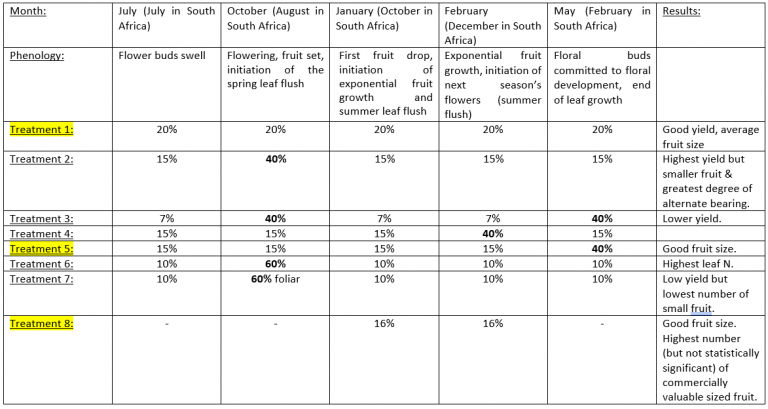
      • Annual dose of 140 kg N / ha applied in California. Recommended treatments are highlighted.

Back to Table of Contents

Phenology & properties:
      • 4-6 applications during active growth period (August – April) of young trees
      • 3-4 applications on bearing trees to result in 15-30 % of the annual N requirement about 4-6 weeks before full flower or early fruit set, 10-25 % with spring vegetative growth, 30-40 % with the summer vegetative growth and 20-30 % after harvest
      • Nitrate is mobile in xylem
      • Ammonium is quickly incorporated into organic molecules
      • Heavy applications result in vegetative growth with dense foliage/canopy, leaves large and dark green, long shoots produced, yields reduced

Back to Table of Contents

Cause of deficiency:
      • Sandy, lightly structured soil
      • Extremes of pH
      • Poor levels of organic matter
      • High rainfall or heavy irrigation (leaching)
      • Large quantity of crop residue, need N to decompose
      • Crops with rapid growth habit
      • A deficiency of Mo will decrease N use because enzyme nitrate reductase is dependent on Mo
      • Mg will synthesise proteins and metabolize P and N

Back to Table of Contents

Interactions with other nutrients (Joyce 2021):
      • Oversupply of N promotes excessive vegetative growth (Wolstenholme 2004) which creates a N source for later translocation to developing fruit (Zilkah et al. 1987), diverting Ca away from developing fruit (Leonardi 2005, Witney et al. 1990a).
      • High fruit N and low fruit Ca concentrations have been associated with predisposition to and development of postharvest disorders and diseases (Joyce 2021).
      • Application of nitrates can result in reduced root uptake of Cl, and alleviate toxicity (Bar et al. 1987)

Back to Table of Contents

Table of Contents:

Deficiency Symptoms | Function | Norms | Nutrient Application | Phenology | Causes of Deficiency | Interaction with other Nutrients

Deficiency Symptoms
      • Stunted growth
      • Small leaves and leaf abscission
      • Bronze colour in new growth
      • Bronzing has been observed on Lamb Hass and the deficiency was plausibly rectified with a foliar application of MAP
      • Branch dieback

Back to Table of Contents

Function:
      • Development & stimulation of root growth of young trees
      • Metabolic process (energy transfer)
      • Cell division
      • Photosynthesis
      • Sugar and starch formation
      • Movement of carbohydrates

Back to Table of Contents

Norms:
      • Leaf P = 0.1 / 0.12 – 0.20 %
      • Leaf P : N ratio of 1 : 15 during summer flush
      • Topsoil P = 8 – 27 mg/kg (Resin method), 14 – 46 mg/kg (Ambic method), 18 – 60 mg/kg (Bray 1 method)

Back to Table of Contents

Nutrient application example(s):
      • Apply a NPK mix of 14 % N, 12 % P and 3 % K at a rate of 10 – 30 L/ha in a 15 ratio mixed with water as foliar spray
      • Use superphosphate (10% P) at 50 g/m2 drip area or MAP (10-20 g/m2 drip area) for soil applications.
      • Apply to individual yellow looking trees to rectify tree differences in the orchard
      • Consider applying during root flushes (with K) to maximize uptake from the soil (Newett et al. 2018)

Back to Table of Contents

Phenology & properties:
      • Root growth and root flush (October – December and March – April)
      • Mobile in xylem and phloem
      • Phosphorous is converted to an organic form within minutes of uptake and quickly metabolized
      • Inorganic parts of the applied P (85 – 90 %) is stored in vacuoles as orthophosphate
      • Mg activated kinase enzymes and trigger many P energy transfer reactions

Back to Table of Contents

Cause of deficiency:
      • Extremes in soil pH
      • Low organic matter
      • Plants with poor root structures
      • P retentive soils
      • High Fe content in soil
      • Cool, wet weather
      • Low B levels reduce the ability of P to transfer energy in the plant and may halve the capacity of the plant to absorb P
      • Low Zn levels result in unregulated P uptake, may cause excessive / toxic levels of P (similar visual symptoms as Zn deficiency)
      • Al combines with P in the intercellular areas of the root tips and decreases P translocation of P into the plant and induces deficiency symptoms
      • Nitrate depresses the uptake of anions such as Phosphate
      • Mg will help with synthesis of proteins and metabolism of P and N

Back to Table of Contents

Interactions with other nutrients (Newett et al. 2018):
      • Too much P in the soil will result in soil Zn being tied up, and a deficiency in leaf Zn.

Back to Table of Contents 

Table of Contents:

Deficiency Symptoms | Function | Norms | Nutrient Application | Phenology | Causes of Deficiency | Interaction with other Nutrients

Deficiency Symptoms
      • Interveinal chlorosis of leaves or light brownish-red necrotic spots on leaves that coalesce over the entire leaf blade between the main veins
      • Small, narrow leaves
      • Increased incidence of pulp spot and vascular browning
      • Twigs very thin and die back

Back to Table of Contents

Function:
      • Important role in cell division, transpiration, stress reduction, fruit size and disease resistance
      • Stomatal function, cell elongation and turgor pressure (osmotic regulation – Hawkesford et al. 2012)
      • Synthesis of proteins
      • Enzyme activator & coenzyme function
      • Na may replace K in several essential roles
      • Helps with pest and disease resistance (Hawkesford et al. 2012)

Back to Table of Contents

Norms:
      • Leaf K = 0.75 – 1.0 / 1.15 %
      • Leaf K : N ratio of 1 : 175 for strong, firm growth (in California, optimum Hass leaf ranges are 2.2-2.6% N and 0.75-2% K however for high-yielding trees leaf K is 0.8% and yield potential suppressed above 1% leaf K (Crowley et al. 2016)
      • Leaf K : Ca ratio of 1 : 075 on summer flush leaf test
      • Soil K = 70 (sandy soil) – 250 (clay soil) ppm
        > 1.5 % (Nov) and > 1.8 % (Feb) (may be more prevalent in soils than Ca and less likely to be leached (Newett et al. 2018)
      • Fruit N : K ratio > 10 (Nov) and < 5 (Feb)
      • Leaf concentration reflects fruit concentration (Willingham et al. 2006)
      • Monitor throughout the season
      • Over-application can result in K-induced deficiency of Ca and Mg (Joyce 2021) and reduced uptake of both nutrients (Hofman et al. 2005), reduce yields and promote alternate bearing (Crowley et al. 2016).
      • High fruit levels associated with increased diffuse discolouration (Hofman et al. 2002, 2005, Koen et al. 1990), increased body rot severity (Hofman et al. 2002, Marques et al. 2006, Willingham et al. 2006) and decreased ripening time (Hofman et al. 2002)
      • K content of mulch typically high – 4% (Newett et al. 2018)

Back to Table of Contents

Nutrient application example(s):
      • Liquid potassium (30 % K) can be applied as foliar spray at a rate of 10 – 12 L/ha
      • Apply K2SO4 or KNO3 at 10 g/m2 of surface area covered by tree canopy (ground applications)
      • Only use KNO3 for ground applications if leaf N levels in greenskins < 19 or < 20 in Hass
      • KCl is not a recommended source of K because the Cl content can result in leaf burn and is detrimental for organic and biological subsistence in the soil
      • Delay application until latter stages of fruit development (last 6 weeks) and only apply if needed, K accumulates in fruit during these stages (Rosecrance et al. 2012, Silber et al. 2018)
      • Do not apply with Ca
      • Can be applied during root flush if needed along with P (Newett et al. 2018)

Back to Table of Contents

Phenology & properties:
      • Apply 30 % of the total K requirement 4-6 weeks before full flower, 40 % during summer vegetative growth and 30% after harvest
      • K uptake by roots is attributed to small hydrophobic molecules that increase ion permeability through membranes (ionophores) which aid diffusion inside root cells
      • Most cellular membranes are highly permeable to K
      • Upward movement via xylem toward new growth
      • Redistribution from old to new growth is common
      • Also transported via the phloem

Back to Table of Contents

Cause of deficiency:
      • Acidic soils (low pH)
      • Sandy, lightly structured soil (leaching)
      • High Mg content in the soil
      • Low K soils have limited K uptake
      • High rainfall or heavy irrigation (leaching)
      • Drought
      • Ammonium (NH4) depress the uptake of K

Back to Table of Contents

Interactions with other nutrients:
      • K and Ca compete for uptake by plant roots – do not apply at the same time.
      • K antagonistic to other nutrients, particularly Ca, in the fruit (Hofman et al. 2005)
      • The ratio of (Ca+Mg):K has been negatively correlated with body rots (Everett et al. 2007, Hofman et al. 2002, Whiley 2013, Willingham et al. 2006), stem-end rot (Whiley 2013, Willingham et al. 2006), vascular browning and leaching and discrete patches (Whiley 2013).
      • Increase the fruit (Ca+Mg):K ratio to >0.065 to reduce development of postharvest body rots in ‘Hass’ fruit (Everett et al. 2007). The reason for this relationship between cation balance and fruit quality is unclear. One possibility is that K and Mg compete with Ca for binding sites on the plasma membrane, potentially disrupting normal membrane function and causing electrolyte leakage (Schonherr & Bukovac 1973).
      • It is easier to upset the balance between these three cations in sandier soils (Newett et al. 2018).
      • Large imbalances between K and N closely associated with alternate bearing (Crowley et al. 2015).

Back to Table of Contents

Function:
    • Synthesis of chlorophyll Important role in photosynthesis
Norms:
    • Leaf Na < 15 ppm
    • Soil Na < 50 ppm
Nutrient application example(s):
    • Apply in small quantities as foliar spray
    • Heavy applications result in interveinal necrotic spots and dessication of young and mature branches
Phenology & properties:
    • It is rarely required to alleviate deficiencies
Interactions with other nutrients (Lovatt 2013):
    • Na competes with K for uptake by K uptake proteins (Zhu 2007).
    • Na also competes for uptake with K, Ca, and other cations as they move through nonspecific channels into root cells (Horie & Schroeder 2004)

Table of Contents:

Deficiency Symptoms | Function | Norms | Nutrient Application | Phenology | Causes of Deficiency

Deficiency Symptoms
      • Chlorosis and smaller leaves produced
      • More symptomatic on younger leaves

Back to Table of Contents

Function:
      • Important for protein formation and protein development in the plant
      • Form biotin and thiamin vitamins
      • Help plant to withstand low temperatures
      • Carbon dioxide assimilation
      • Synthesis of oils
      • Adequate S levels aids uptake of N

Back to Table of Contents

Norms:
      • Leaf S = 0.2 – 0.4 %
      • Soil S > 20 ppm

Back to Table of Contents

Nutrient application example(s):
      • Sulphur can be applied in the forms of gypsum (CaSO4) in the soil at a rate of 1-3 tons/ha or together with K in the form of KSO4 at 10 g/m2 of ground area covered by tree canopy
      • Liquid sulphur (25 % S, 11 % N) can be applied as a foliar spray at a rate of 5 – 7 L/ha

Back to Table of Contents

Phenology & properties:
      • Apply when applying lime in the soil
      • Transported via xylem to new shoots and then becomes immobilized
      • Little downward movement occurs in phloem
      • If limited, S becomes redistributed from roots and petioles to younger tissue
      • No translocation from old to young leaves

Back to Table of Contents

Cause of deficiency:
      • Acidic soils (low pH)
      • Sandy, light poorly structured soil
      • Low levels of organic matter
      • Waterlogged soils
      • Dense, poorly aerated soils

Back to Table of Contents

Table of Contents:

Deficiency Symptoms | Function | Norms | Nutrient Application | Phenology | Causes of Deficiency | Interaction with other Nutrients

Deficiency Symptoms
      • Yellow strip along side-ribs (tram tracking) while midrib and base remain green
      • New leaves are small and curled
      • Short internodes leading to ‘rosetting’, also caused by reduced leaf and shoot growth also producing a “feather duster” appearance
      • Round fruit, occasionally reddish
      • Leaf mottling between veins
      • May be more evident in spring as soils are too cold for uptake (Newett et al. 2018)

Back to Table of Contents

Function:
      • Important element in young actively growing leaves and during flowering
      • Important in the plants’ energy system
      • Important to produce plant growth regulator group auxins
      • Synthesis of nucleic acids
      • Normal function of certain enzyme systems
      • Fruit flesh Zn levels do not correlate with severities of body rots, stem end rot, diffuse discolouration and vascular browning (Marques et al. 2006)

Back to Table of Contents

Norms:
      • Leaf Zn = 25 / 30 – 100 ppm
      • Soil Zn = 5 – 20 ppm
      • Fruit Zn > 30 ppm (Nov) and > 50 ppm (Feb)

Back to Table of Contents

Nutrient application example(s):
      • Due to better bioavailability of chelated fertilizers, the application of a chelated Zn can be advised for foliar sprays
      • Zn chelate EDTA has had some success in curing Zn deficiency (Newett et al. 2018)
      • 2-3 foliar sprays of Zinc Oxide (75 %) at a rate of 200 g/100 L or 06 – 1 L / ha
      • Zn (20 %) + Mn (125 %) suspension at a rate of 2 – 4 L/ha (200 – 400 L water/ha) on spring and autumn flushes, apply before leaves have hardened off (Newett et al. 2018)
      • Zinc sulphate (35 %) at 5-10 g/m2 surface area covered by tree canopy as ground application, ZnSO4 as a foliar spray applied at the cauliflower stage of flower buds with new leaf flush already emerging is ineffective in correcting Zn deficiency with no positive effect on yield and fruit size however two applications of 0.75 kg ZnSO4 /tree /year effective in increasing yield, fruit size and fruit shape, poor correlation between Zn applied and Zn leaf level (Salazar-Garcia et al. 2008)
      • Always place Zn in 2-4 small heaps and not broadcasted under the tree
      • Apply as a concentrated band where there is a high density of roots and plenty of organic matter (Newett et al. 2018)

Back to Table of Contents

Phenology & properties:
      • Apply on young growth during spring flush
      • Mobile in xylem and found in plant sap as an ion
      • Zn is radically transported across the root to the endodermis through the symplast to the xylem

Back to Table of Contents

Cause of deficiency:
      • Alkaline soils (high pH)
      • High levels of organic matter
      • High levels of phosphorous in the soil
      • Cool, wet weather conditions

Back to Table of Contents

Interactions with other nutrients (Newett et al. 2018):
      • K and Ca compete for uptake by plant roots – do not apply at the same time.
      • K antagonistic to other nutrients, particularly Ca, in the fruit (Hofman et al. 2005)
      • The ratio of (Ca+Mg):K has been negatively correlated with body rots (Everett et al. 2007, Hofman et al. 2002, Whiley 2013, Willingham et al. 2006), stem-end rot (Whiley 2013, Willingham et al. 2006), vascular browning and leaching and discrete patches (Whiley 2013).
      • Increase the fruit (Ca+Mg):K ratio to >0.065 to reduce development of postharvest body rots in ‘Hass’ fruit (Everett et al. 2007). The reason for this relationship between cation balance and fruit quality is unclear. One possibility is that K and Mg compete with Ca for binding sites on the plasma membrane, potentially disrupting normal membrane function and causing electrolyte leakage (Schonherr & Bukovac 1973).
      • It is easier to upset the balance between these three cations in sandier soils (Newett et al. 2018).
      • Large imbalances between K and N closely associated with alternate bearing (Crowley et al. 2015).

Back to Table of Contents

Table of Contents:

Deficiency Symptoms | Function | Nutrient Application | Interaction with other Nutrients

Deficiency Symptoms
      • Molybdenum (Mo): Low levels will result in reduced growth of seedlings, translucent spots on the leaves of potted trees, and leaf abscission
      • Nickel (Ni): Low levels will result in reduced growth of seedlings

Back to Table of Contents

Function:
      • Si
        • Enhances mechanical strength of fruit tissues (Dehghanipoodeh et al. 2016, Marodin et al. 2016, Zhang et al. 2017)
        • Activates plant defences against insect and pathogen attack (Islam et al. 2020).
        • A slow-release product, such as that used by Dann and Le (2017), holds promise for improving tree health but more research is needed.

        Mo

        • Mo is an essential trace element involved with N metabolism and as a co-factor for several essential enzymes (Wolstenholme 2017).
        • Mo levels in sap analyses are quite seasonal and influenced by the weather e.g. low Mo occur in a tree during a dry summer.
        • If there is a problem with nitrate or ammonia levels then investigate Mo levels.

Back to Table of Contents

Nutrient application example(s):
      • Mo is phloem-mobile and can be applied as a foliar spray.
      • Mo is the only nutrient whose availability increases with pH i.e. the higher/more alkaline the soil pH, the more available Mo is. In acidic soils, Mo availability of molybdenum is very low.
      • S and Mo compete strongly during root uptake from the soil so sulphate-based fertilisers including gypsum will suppress uptake of Mo.

Back to Table of Contents

Interactions with other nutrients (Newett et al. 2018):
      • There is an inverse relationship between Mn and Mo. Soils with high Mn e.g. in acidic soils with high water content, can be deficient in Mo especially if organic matter levels are low.

Back to Table of Contents

  • Add mulch and fill trenches with compost to supply organic matter
    – apply twice annually before root flushes
  • Materials for mulch include compost, wood chips, slashed materials, and branches. Composted manure can also be used. Do not use raw manure.
  • Compost consists of four basic materials: brown materials (carbon-rich), green materials (nitrogen-rich), water, and air. The ratio of browns to greens should be at least 3:1.
  • Brown materials can include: fallen decaying leaves (note that fresh fallen leaves are considered a green material), twigs and other woody material (including wood chips and sawdust), straw or hay, and paper (used paper, newspaper, paper plates, paper napkins, used coffee filters) and cardboard. Try to shred these into small pieces to aid the composting process.
  • Green materials can include: kitchen scraps (do not include citrus peels or onions, chives or anything from the Allium family), grass and plant cuttings, coffee grounds, and manure (do not include dog or cat manure – rather use manure from domesticated animals: cows, horses, pigs, etc.).
  • A compost pile is usually kept in a closed structure and built up layer by layer: browns then greens, water so that the mix is damp, and then mix with a compost turner or garden fork, and repeat the process. Once done, close the structure to protect the pile from birds and animals, and retain and trap heat that is generated. A fresh layer of compost should accumulate at the bottom of the pile within 8 weeks.

Supporting documents:

  1. Sample and do leaf analyses annually.
  2. Healthy, fruit bearing trees should be sampled separately from stressed, non-bearing trees.
  3. Sample trees should represent an area with homogenous soil type and microclimate.
  4. Take leaf samples from terminal, non-bearing branches that do not show signs of a new flush and leaf samples should preferably have been exposed to direct sunlight.
  5. Collect 6 – 8 month old leaves (see illustration).
  6. Sample in the morning after dew has dried off.
  7. Mark sample trees clearly and use the same marked trees year after year and also for taking soil samples.
  8. Collect 4 leaves per tree at shoulder height so that there are roughly 80 leaves per sample representing a block that is not larger than 3 ha.
  9. Sample randomly (across the orchard) in the block from 20 trees on ≤ 3 ha.
  10. Sample different soil types, tree ages and cultivars separately.
  11. Keep the sample cool and send it to the laboratory within 24 hours of sampling.
  12. Place leaf samples in a paper bag or perforated plastic bag that is clearly marked with the farm name, reference to the orchard, sample number and sample date.
  13. Take the leaf samples to the same laboratory every year and send it in for analyses as soon as possible.

Soil analyses are vital to avocado management as it can give an indication of the available nutrients in the soil. Leaf analyses can give an indication of the current nutrient status of the tree.

To take a soil sample, you will need the following:

  • Wheelbarrow
  • Soil Auger
  • Clean bucket
  • Clean sampling bags
  • Labels / Marker

Procedure:

  1. Take soil samples at the same time as leaf samples (Feb-Apr) from similar soil types in the orchard.
  2. Do not take soil samples within a week of fertilising.
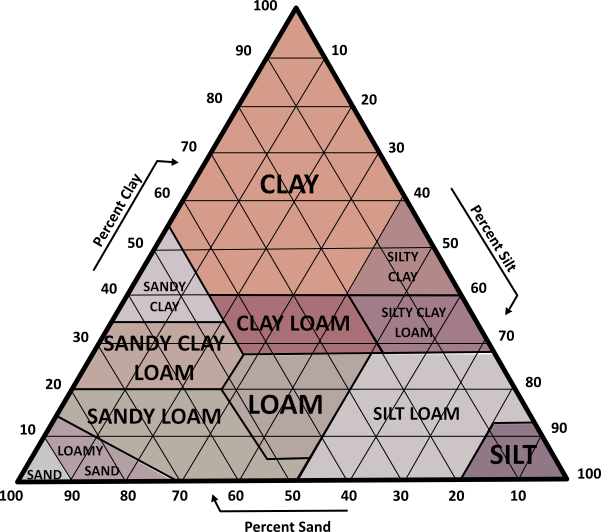
  3. Have the fraction sand, silt and clay analysed for every different soil type on the farm (also used to determine the soil type).
  4. Soil samples should be taken at the same indicator trees as where the leaf samples are taken.
  5. Use the same tree to take samples every year.
  6. Mark the sample trees clearly.
  7. Clear the soil from any mulch or fertiliser before the sample is taken.
  8. Take the soil sample midway between tree trunk and canopy drip line at a depth of 15 – 30 cm deep (topsoil) and 35 – 55 cm deep (subsoil)
  9. Subsoil samples are only important if acidity is suspected
  10. Always keep topsoil and subsoil samples separate.
  11. Combine at least 10 samples (from underneath 10 of the 20 leaf sampling trees) into a ± 1 -2 kg strong, clean plastic bag.
  12. Keep the sample cool and marked clearly with the farm name, reference to the orchard, sample number and sample date.
  13. Take the soil samples to the same laboratory every year and send them in for analyses as soon as possible.

Reference: R. A. Abercrombie. 2011. “Fertilization” In: The cultivation of avocado. Ed. E. A. de Villiers & P. H. Joubert. ARC-Institute for Tropical and Subtropical Crops, p. 142-144.

Macro elements withdrawn from the orchard system in kg per ton yield for Hass. The values in brackets are the equivalent gram nutrient withdrawn per cm trunk circumference (Snijder & Stassen 2000).

Guideline for the quantity of fertiliser (in grams) per year per avocado tree age required (Stones 2009, Abercrombie 2011).

Calcitic lime or dolomitic lime is only necessary about once every 2–3 years and the need to use it depends on soil analysis results. If more than 2 t/ha of calcitic lime or dolomitic lime is needed, it is best to split the application into no more than 2 t/ha at a time, with 6-12 months between applications to avoid trace element tie ups. The optimal soil pH for avocado is between 6.2 and 6.5. Lime (calcium carbonate) can be added to acidic soil to raise the pH to 6.5. Dolomitic lime can be substituted for part of the lime requirement if magnesium (Mg) is deficient. Calcium nitrate or calcium sulfate (gypsum) may be used to provide calcium when soil pH is adequate. Also, adequate calcium may be provided by Phosphorus (P) applications when super phosphate (20% Ca) or triple superphosphate (14% Ca) is used. Lime, dolomitic lime, and P fertilizers should be mixed with the soil thoroughly prior to planting to place the fertilizers at the root zone.

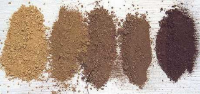
Lighter soil is usually more sandy while red soil contains more clay and dark soil contains more loam.

  • Evaporation: Water loss through direct evaporation from any wet surface.
  • Transpiration: Plant water loss through leaf stomata.
  • Evapotranspiration: The combined effect of water loss through evaporation and transpiration.

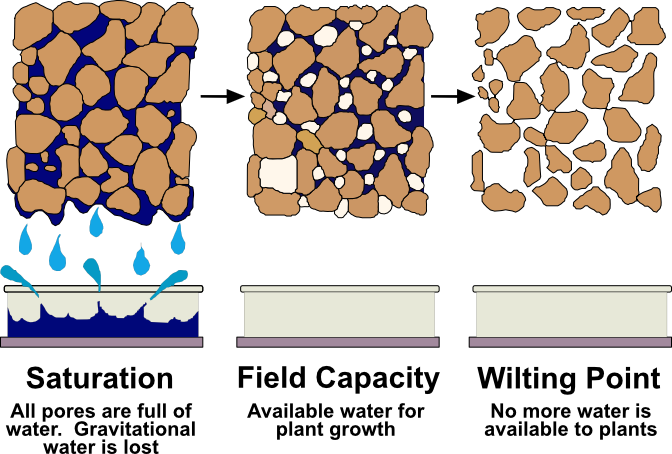
Try to manage the soil water content so that it is at field capacity. This will enable the plant to grow optimally and little opportunity for pathogen infection.

Sub-optimal soil characteristics can be overcome to some extent by:

  • short cycle irrigation
  • drainage canals
  • deep ploughing
  • planting on ridges
  • wide, deep planting holes prepared with organic material
  • Before embarking on such activities, the long-term economic implications of these activities should be determined.

home-sketch