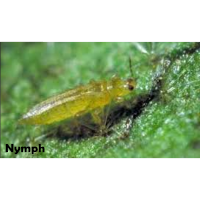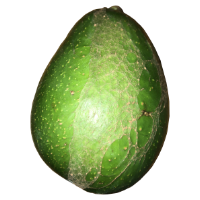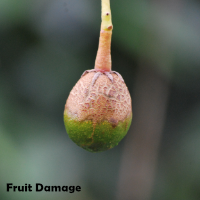


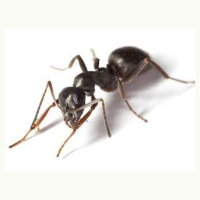
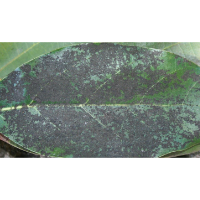
Scale insects and mealy bug excretes honeydew, which settles on the leaves and fruit. Ants protects these pest insects from predators, and feed on honeydew. The movement of ants spreads the honeydew. Sooty mold develops on the honeydew, which causes a black coating on the fruit and leaves. Mold on the leaves disrupts photosynthesis which leads to crop reduction. Leaf drop can also occur with heavy infestations.
Pest description:
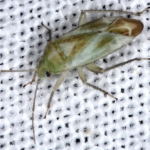
- Small to medium bugs, green or brown in colour
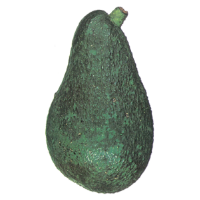
- Damage leads to fruit malformation, premature fruit drop, necrotic lesions and protrusions on fruit
- Avocado fruits <30mm in diameter are most susceptible to damage
- The avocado bug (Tayloryligus sp., Family Miridae) is the dominant sucking bug
- Sucking bugs are predominantly nectar feeders
- Sucking bug mouthparts are both sucking and piercing which enables the bugs to not only penetrate plant tissues, but also feed (suck) on the nectar of the flowers
Suggested scout methods:
- Fruit are most susceptible when fruit diameter is smaller than 3cm. Fruit maturity also plays a role in rendering fruit susceptible: Schalk Schoeman found that in Pinkerton this threshold was when fruit reaches a dry matter content of 13%/moisture content of 87%.
- Scout for insects or damage symptoms
- Scout 10 trees per block, 10 panicles per tree
- Thresholds-
- On year: > 13 avocado bugs / block
- Off year: > 7 avocado bugs / block
Control options:
- MRL’s
Other possible control mechanisms:
- Use canopy management and pruning to increase light penetration, which will also allow for better spray penetration
- Leguminous cover crops can act as possible alternate hosts. Consider planting covers such as marigolds, onions/garlic that might repel bugs. See this article and table for lists.
- A biological control agent – Green Shield (the parasitic wasp Trissolcus basalis) – is available from Koppert. Compatibility with other control agents has been determined independently; wait 4 weeks or longer after applying Acephate and/or Beta-cyfluthrin to introduce the wasp. The wasp is compatible with Pymetrozine. For compatibility with other control agents, please contact Koppert or your regional horticulturist. Note that Trissolcus basalis is not registered on South African avocados.
Other ongoing actions:
- Registration of products with actives Eco-Bb, Neem oil, Potassium silicate, Bifenthrin, Spirotetramat, and Lambda cyhalothrin. Several dossiers are on the desk of the Registrar of Act 36 of 1947.
- Kairomones: 6 were identified by Ben Botha in work done for SAAGA. An agreement has been signed between SAAGA and Insect Science. One of these could be used as a trap attractant.
- Biocontrols: egg wasp parasitoids Anastatus sp. and Trissolcus sp.
- Although degree day models have been investigated, sucking bug pests often have multiple overlapping lifecycles within a season meaning that a degree day model to predict when control agents (chemical and/or biocontrols) can be implemented, will not have value.
- We will raise the need for attract-and-kill products and products with short withholding periods with chemical and biocontrol companies.
Supportive Documents:
What do look out for:

Avocado bug (Broken Back Beetle)
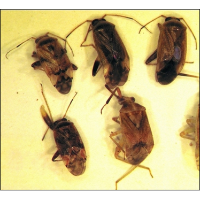
Avocado bug (Broken Back Beetle)
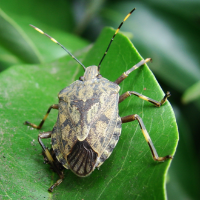
Coenomropha spp. (Bark Beetle)
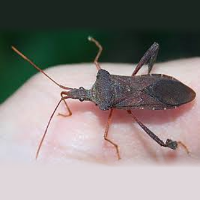
Tip Wilter
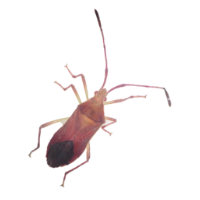
Coconut Bug
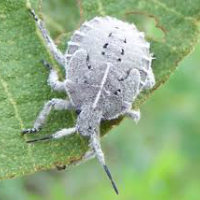
Powdery Stink Bug
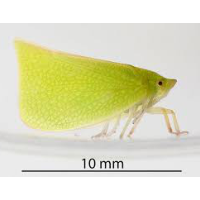
Leaf Hopper
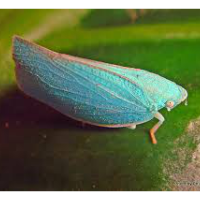
Leaf Hopper

Green Vegetable Bug

Pest description:
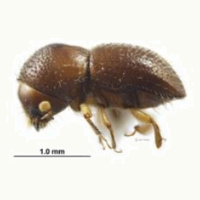
- Euwallacea fornicatus is also known as the polyphagous shot hole borer
- It is an ambrosia beetle native to Asia that has a symbiotic relationship with Fusarium species, including the pathogen Fusarium euwallaceae
- The beetle carries pathogen spores in specialized mouthparts called mycangia
- Adult females burrow into trees to establish brood galleries
- Pathogenic fungi colonize the gallery walls to provide a food source for the developing larvae and adult beetles
- The fungus invades the vascular tissue of the avocado, causing necrosis of the cambium that results in branch dieback and tree death
Suggested scout methods:
- Look for branch wilting and die-back
- Look for “shot-holes” – white powdery exudate on the avocado stem & branches
- Scout disease / stressed trees regularly
Control options:
- Cut the tree if the pest is noticed and burn infected wood
- Avoid moving infested material between orchards and sterilize tools with household bleach
- While there are no chemicals registered on avocados specifically against PSHB; Abamectin (thrips), Acephate (fruit sucking bug complex), Chlorantraniliprole (false codling moth), and Beta-cyfluthrin (fruit sucking bug complex) are known to control the pest in other parts of the world.
- Contact your region’s SAAGA horticulturist to inform him/her of the beetle’s presence.
More information:
Sample submission
Send samples to the following address:
Attention: Dr. Lieschen De Vos
FABI Diagnostic Clinic
FABI
University of Pretoria
Lunnon Road
Hillcrest
Pretoria, 0083
Tel: 012 420 3938, 012 420 5826
Email: diagnostic.clinic@fabi.up.ac.za
There is a dedicated page on PSHB at the FABI website, along with FAQs on the pest. Please visit https://www.fabinet.up.ac.za/index.php/pshb.
Please contact the Diagnostic Clinic before posting, sending or couriering any living beetles. These insects can eat through paper and plastic!
Please follow the sample instructions
Please download, fill in and include relevant details in the sample submission form
Pest description:
Pseudotheraptus wayi Brown
- Size: ±15 mm in length and ±4 mm in width
- Ventral side of adult is creamy whitish-brown without stippling
- Long slender antennae
- No spiny protuberances on thorax
- Female lays an average of 80 eggs in total during her life cycle and the cycle from egg to adult lasts 31 – 48 days
- The adult life-span (all stages) of P. wayi ranges from 73 – 84 days
- Damage on fruit usually seen toward the end of the season
- Damage is limited to a single tree or a few trees in close proximity of each other
Suggested scout methods:
- Scout for coconut bugs or fruit damage symptoms
- Damage is only visible long after coconut bug feeding, but this may indicate hot-spots in the orchard for future pest monitoring
Suggested program:
- Control doing spot sprays where pest damage on fruit are evident and pests are monitored
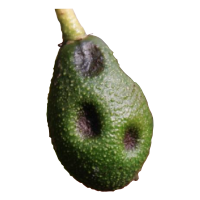
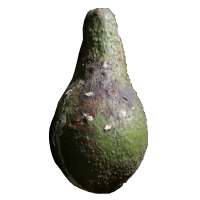
Fruit Damage caused by Coconut Bug:

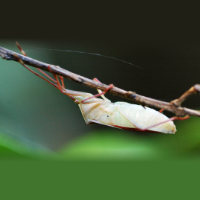
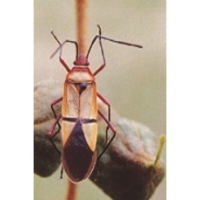
Coconut Bug Images:
Pest description:
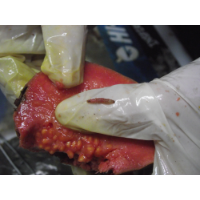
- False codling moth (FCM), Thaumatotibia (=Cryptophlebia) leucotreta
- An Important pest of citrus throughout southern Africa
- Also infests guava, macadamia, pecan, avocado, litchi, vines and many other cultivated and wild fruits
- The larva is creamy white at first, with a brownish black head
- The fully grown larva has a dark brown head and pinkish red body, with less intense colour on the underside
- Larvae grow to a length of 15-20 mm
- The adult moth is relatively small, about 10 mm long when at rest, with an inconspicuous mottled brownish grey colour
Suggested scout methods:
- Scout for pest damage, or with pheromone traps
- Traps for FCM include: 1) Chempac Yellow Delta Traps and Chempac False Codling Moth Lure, or 2) Insect Science Yellow Delta Traps and FCM PheroLure®.
Traps should be placed at a frequency of 1 trap per 4 hectares at a height of approximately 2 m above ground in the shaded area of a tree. Begin trapping in October and continue until harvest is completed. If 10 or more moths are recorded in a trap in a week then control measures should be initiated or intensified.
Control options:
- MRL’s
- In situations of high pressure there is no single control measure that will control FCM to a desirable degree, so it is critical to understand that FCM control is dependent on a multidisciplinary approach to be effective and least disruptive to natural enemies.
- Monitor for FCM in your orchards.
- When necessary, use registered chemicals to control population levels at the correct time (critical).
- Do orchard sanitation.
- Keep accurate records of monitoring, sanitation and chemical treatments.


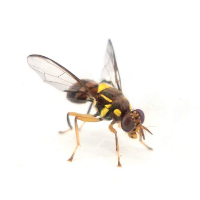
Pest description:
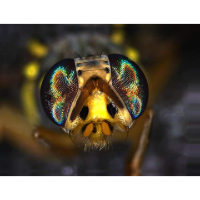
- Four indigenous fruit fly species of the genus Ceratitis (C. capitata, C. cosyra, C. rosa, C. quilicii) are of economic importance for the production of fruit crops in South Africa
- The invasive fruit fly, Bactrocera dorsalis (previously Bactrocera invadens) or Oriental fruit fly, is very important for phytosanitary reasons
Control options:
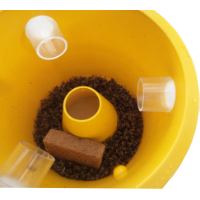
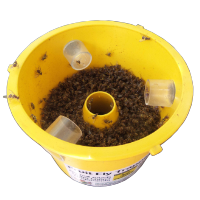
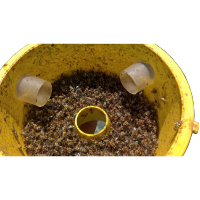
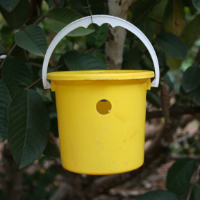
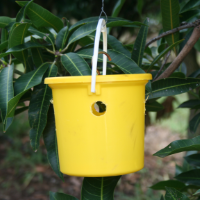
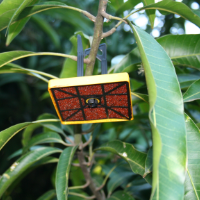
- There are two types of traps registered for monitoring Bd, with the main difference being the frequency with which they are placed. The two types are Chempac Bucket Traps with Chempac ME Lure and a Vapona (dichlorvos) strip, and Lynfield Traps with Invader-LureTM and a Vapona (dichlorvos) strip.
- For both types, hang traps at 1.5 m above ground in the canopy of the tree on the shady, south-eastern side.
- Trapping should continue throughout the year.
- If 1 or more Oriental fruit flies are recorded in a trap in a week then control measures should be initiated or intensified.
- Several areas are considered pest free areas for Bd. In areas considered free from this pest, Chempac Bucket Traps with Chempac ME Lure and a Vapona (dichlorvos) strip each should be placed at a frequency of 1 trap per 100 hectares, with at least 1 trap per PUC. Lynfield Traps with Invader-LureTM and a Vapona (dichlorvos) strip each should be placed at a frequency of 1 trap per 10 000 hectares, also with at least 1 trap per PUC. Traps should be placed in areas where infestation is likely to occur e.g. dumps where fruit waste is discarded or human dwelling places. If a tree is not available for a trap to be hung in, a pole can be set up instead.
- In areas not free from Bd, Chempac Bucket Traps with Chempac ME Lure and a Vapona (dichlorvos) strip each should be placed at a frequency of 1 trap per 5 hectares. Lynfield Traps with Invader-LureTM and a Vapona (dichlorvos) strip each should be placed at a frequency of 1 trap per 25 hectares.
- In areas where Bd is present, baiting should be done using GF-120 or M3 bait stations. Baiting should be done in combination with the placing of MAT (Male Annihilation Technique) blocks.
- Traps for other fruit fly species (Ceratitis spp.) include McPhail Type Traps with Chempac BioLure® Fruit Fly. Traps should be placed at a frequency of 1 trap per 2 hectares. Trapping should begin after flowering and continue until harvest. If 7 or more fruit flies are recorded in a trap in a week then control measures should be initiated or intensified.
- MRLs
Suggested program:
- Remove mature, fallen fruit from the orchard floor to break the breeding cycle
- Use attract and kill methods to control fruit flies (baiting)
Bactrocera dorsalis Status in Production Areas:
Limpopo:
District: / Status:
Vhembe / Present, subject to official control
Mopani / Present, subject to official control
Capricorn / Present in some areas, subject to official control
Sekhukhune / Preset in some areas, subject to official control
Mpumalaga:
District: / Status:
Ehlanzeni / Present, subject to official control
Nkangala / Present, subject to official control
KwaZulu-Natal:
District: / Status:
uMgungundlovu / Present in some areas, subject to official control (NB: Recent Changes)
Harry Gwala / Present in some areas, subject to official control
uMzinyathi / Absent
King Cetshwayo / Present, subject to official control
Ugu / Present, subject to official control
Eastern Cape:
All districts / Absent
Western Cape:
All districts / Absent
Fruit Fly & Damage on Fruit
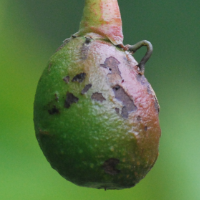
Pest description:
- Caterpillars belonging to the insect order Lepidoptera and family Geometridae
- Looper species occasionally feed on the skin of young fruit and avocado leaves
- On mature fruit the lesion is slightly sunken and shows brown scabs
- Damage can easily be confused with wind damage
- Severe leaf damage can lead to defoliation
Pest description:
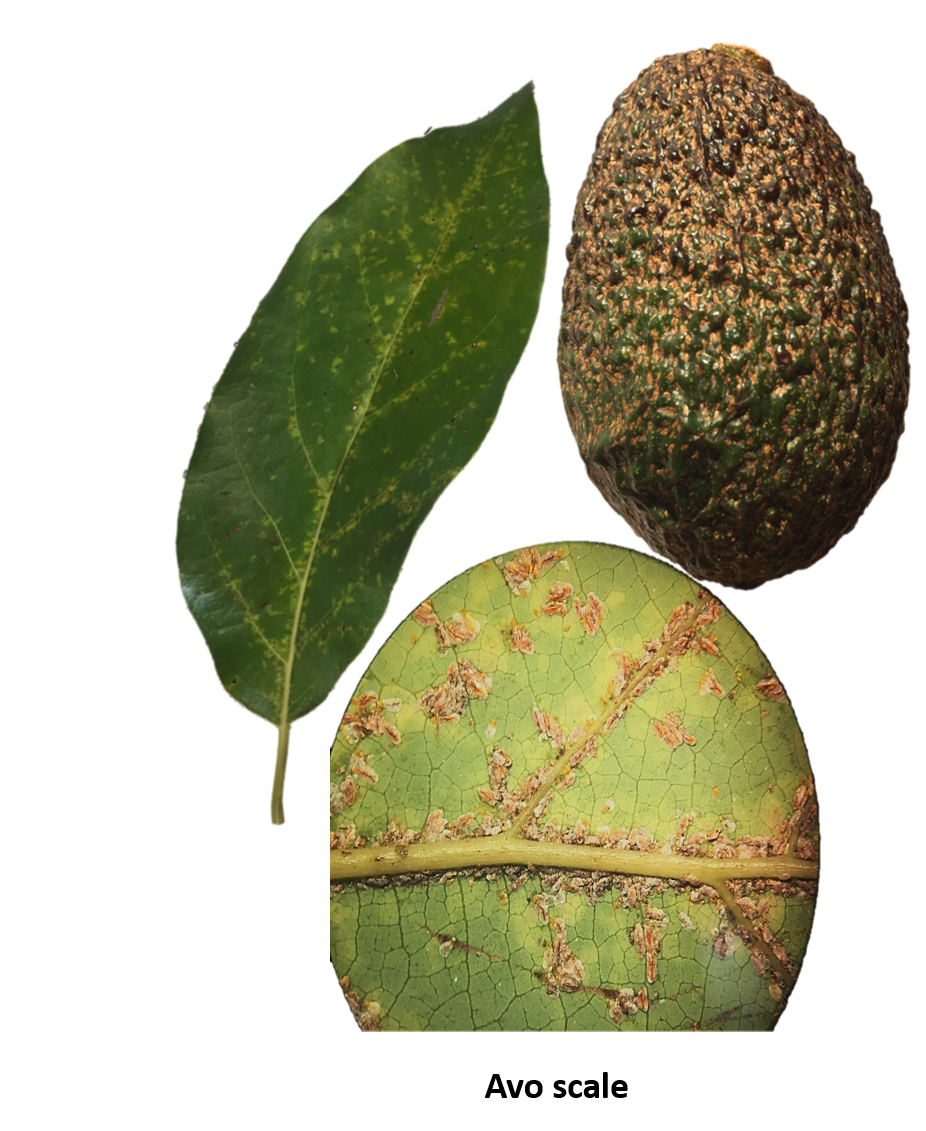
Avocado scale – Fiorinia fioriniae (Targioni-Tozzetti)
- Found on many different host plants in the world
- Feeding damage occurs on the fruit and leaves, and is caused by the immature stages that are light brown in colour
- Female avocado scales have a transparent exoskeleton, are orange-brown in colour and 1.0 – 1.3 mm in length
- Immature males have a white exoskeleton and are elongate-oval in shape
- Very little research has been done to date on the biology and control of avocado scale in South Africa
- In other parts of the world, 3 – 4 generations have been monitored per year in avocado orchards
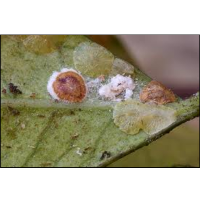 Heart-shaped scale – Protopulvinaria pyriformis (Cockerell)
- One of the most damaging scales on avocado leaves
- No damage is not done to the fruit
- The protective layer (± 3 mm wide) of the female heart-shaped scale is hard, brown and heart-shaped with dark radial stripes
- A waxy egg-sack is often visible under the female scales with 200 – 300 eggs per sack
- The male form of the scale has not been seen in South Africa
- Two generations of heart-shaped scale can be monitored throughout the avocado season in the Nelspruit area.
- Nymphs or crawlers are light green
- They emerge from eggs during November and March
- It takes roughly 5 – 7 months from egg to adult stage, depending on temperature
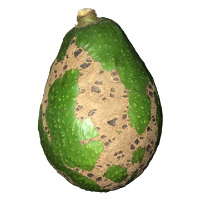
Pest description:
- Minute insects about 1 mm in length with four narrow fringed wings.
- Immature stages and adults hide under the fruit calyx.
- Feed by rasping the plant surface causing small silver blotches.
Suggested scout methods:
- Scout 10 trees per block on all 4 sides. Also scout the edges especially if there is a macadamia block adjacent or in close proximity.
- Scout on the fruit, especially at the northern side and under the calyx
- Suggestion threshold: 4 thrips / fruit
- Scout especially Fuerte fruit
Control options:
- Before deciding on what to use, first check what your losses are due to thrips damage. Watch Dr. Elsje Joubert’s presentation on this as a guide.
- Consider planting Casuarina spp. or Corymbia (= Eucalyptus) torelliana trees as windbreaks, establishing an interrow cover crop and minimizing mowing thereof. These practices have helped citrus growers control thrips.
- Cover crops that can be planted and will reduce thrips incidence and damage include Medicago sativa (lucerne), Lotus corniculatus (Bird’s-foot trefoil), Trifolium pratense (Red clover), Melilotus alba (White sweetclover) and Phacelia tanacetifolia (Lacy phacelia) (see Nengovhela’s thesis – 2020). See also this article and table for a list of cover crops.
- MRL’s
Other ongoing actions:
- Trials are underway to test Formetranate (Dicarzol) with sugar, and Tartar emetic with sugar as controls.
- Although degree day models have been investigated, thrips often have multiple overlapping lifecycles within a season meaning that a degree day model to predict when control agents (chemical and/or biocontrols) can be implemented, will not have value.
- Other control options including attract-and-kill products and entomopathogenic nematodes (including Heterorhabditis bacteriophora and Steinernema spp.) will be raised with chemical and biological control companies.