Soil Guidelines
Lime
Calcitic lime or dolomitic lime is only necessary about once every 2–3 years and the need to use it depends on soil analysis results. If more than 2 t/ha of calcitic lime or dolomitic lime is needed, it is best to split the application into no more than 2 t/ha at a time, with 6-12 months between applications to avoid trace element tie ups. The optimal soil pH for avocado is between 6.2 and 6.5. Lime (calcium carbonate) can be added to acidic soil to raise the pH to 6.5. Dolomitic lime can be substituted for part of the lime requirement if magnesium (Mg) is deficient. Calcium nitrate or calcium sulfate (gypsum) may be used to provide calcium when soil pH is adequate. Also, adequate calcium may be provided by Phosphorus (P) applications when super phosphate (20% Ca) or triple superphosphate (14% Ca) is used. Lime, dolomitic lime, and P fertilizers should be mixed with the soil thoroughly prior to planting to place the fertilizers at the root zone.
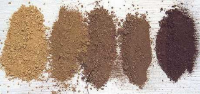
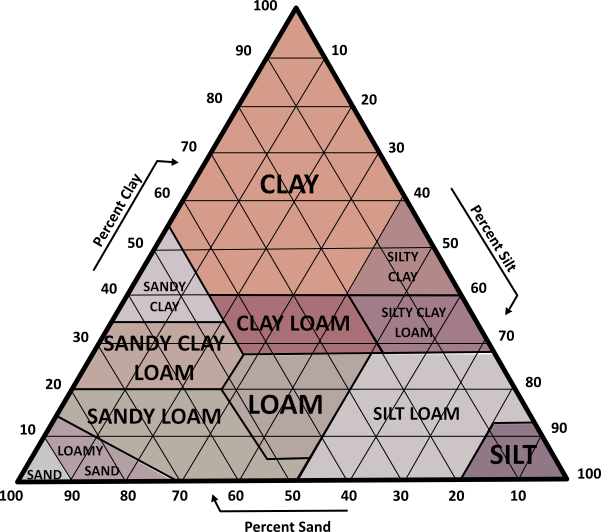
Soil Colour & Characteristics
Important Terms
- Evaporation: Water loss through direct evaporation from any wet surface.
- Transpiration: Plant water loss through leaf stomata.
- Evapotranspiration: The combined effect of water loss through evaporation and transpiration.
Soil Management
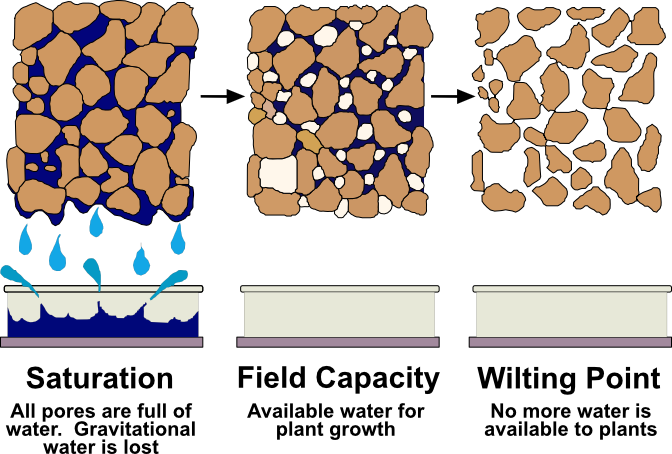
Try to manage the soil water content so that it is at field capacity. This will enable the plant to grow optimally and little opportunity for pathogen infection.
Adverse Soil
Sub-optimal soil characteristics can be overcome to some extent by:
- short cycle irrigation
- drainage canals
- deep ploughing
- planting on ridges
- wide, deep planting holes prepared with organic material
- Before embarking on such activities, the long-term economic implications of these activities should be determined.